If you’re near Kobe and want to try the famous Japanese hot springs, you can take a day trip to Arima Onsen. This one-day Arima Onsen itinerary shows you how to make the most of it.
Arima Onsen is one of Japan’s oldest hot spring towns, with over 1,300 years of history. Frequently visited by emperors, samurai and other nobility over the centuries, Arima Onsen is a luxurious resort, with two types of hot spring water. The Kinsen (gold water) and Ginsen (silver water) can be enjoyed by day guests as well as those who are staying overnight.
As Arima Onsen is relatively easy to get to from nearby cities such as Kobe and Osaka, and has the option for trying the onsen with a day pass (rather than having to stay overnight), it makes for a great day trip destination.
If you’re planning to take a relaxing day trip to Arima Onsen, this itinerary and travel guide will show you everything you need to know. Let’s take a look!
Arima Onsen Itinerary Overview & Map
Despite being one of the oldest and most famous hot spring resorts in Japan, Arima Onsen isn’t much of a sightseeing destination. It’s a quaint onsen town, where you can relax in the hot spring water, eat delicious food and stroll around the traditional narrow streets.
Located on the northern side of Mount Rokkō, Arima Onsen is relatively easy to get to from Kobe, Osaka and Kyoto, making it a great day trip or overnight stay destination if you want to experience onsen culture. As Arima was mentioned in the oldest written record in Japan (the Nihonshoki), it is known as one of the three ancient onsen in the country.
The town itself isn’t very large, and despite a few small hills, it’s easy to make your way around Arima Onsen on foot. Walking around gives you enough time to see the main sights and soak in the hot spring waters. While wandering the streets, I even heard some Geiko practising her shamisen through an open window in one of the houses.
Here is a map of all the highlights included in this day trip itinerary:
The historic importance of this town gives it a lot of charm. As Arima Onsen is located near three imperial cities (Nara, Kyoto and Osaka), the town has been visited by many famous and important people over the centuries.
Being part of Kobe city, Arima was also the first onsen town to open its doors to foreigners. Japan had closed its borders for over 200 years, before finally opening again in 1868. Kobe became a settlement for many foreign merchants and diplomats, and Arima Onsen allowed them to come and enjoy the healing waters.
Arima Onsen’s water is rather special too. Unlike most other hot spring towns, there is no volcano nearby to heat the waters. This unique geological phenomenon also is the reason why Arima Onsen has two types of hot spring water available: Kinsen and Ginsen.
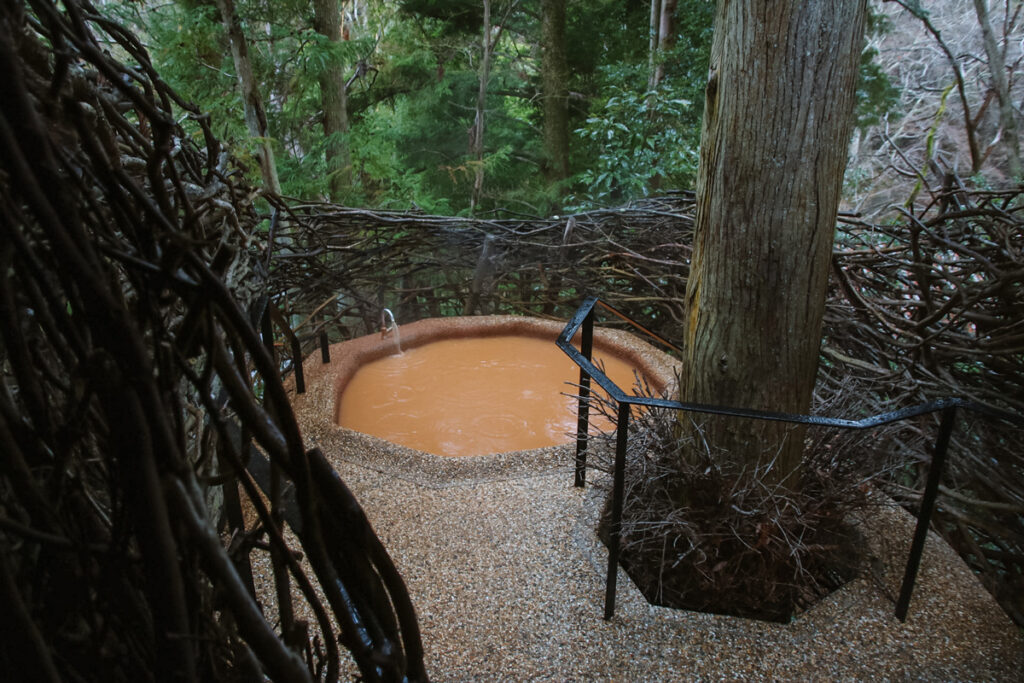
Kinsen water, or golden hot spring, has a red/brownish colour due to its high iron and salt levels. When it comes into contact with oxygen after leaving the Earth, it gets its famous colour. The Ginsen water, or silver hot spring, is colourless and slightly carbonated. Both types of hot spring water can be enjoyed in Arima Onsen and are said to have different healing properties.
Taking a day trip to Arima Onsen is a great way to see the town, however, staying overnight in one of the many amazing ryokans can add a lot to your time here. Especially since Arima Onsen is located in the Hyogo Prefecture and within the Kobe city boundaries, you can expect an exquisite kaiseki dinner, often including the famous Kobe beef.
Day Trip to Arima Onsen Itinerary
Here is what I’d recommend doing when visiting Arima Onsen for the day:
1. Arrive in Arima Onsen
Arima Onsen is a popular day trip destination in the Kansai region due to its relatively easy access from nearby cities like Kobe (30 minutes), Osaka and Kyoto (60+ minutes).
There are express buses that will take you straight to Arima Onsen’s bus terminal, or you can use the train to get to Arima Onsen’s train station (which may require transferring a couple of times).
I will go over all the transport options from Kobe, Osaka and Kyoto later in this guide. However, if you’re going on a day trip, you’ll want to arrive no later than 10–11 AM to make the most of your time here.
2. Visit Arimagawa Water Park
Our first stop in Arima Onsen is Arimagawa Water Park, which is on the way towards the town from the train station. A small river runs through this park, and some of the town’s festivals are held here.
From the train station, you’ll first see Taiko Bridge, which gives you a lovely view of the park. Next to it, you can also make a quick stop at Toyotomi Hideyoshi’s statue.
As I mentioned previously, Arima Onsen’s history dates back to well over a millennium and would only be visited by monks or nobility in its early years. However, General Toyotomi Hideyoshi (also known as Taiko Hideyoshi) and his wife Nene took a liking to the place. They helped establish it further after a devastating earthquake destroyed a large part of Arima in 1596.

Walking a bit further towards the town centre, you can also find a statue of Hideyoshi’s wife, Nene, on the other side of the Arimagawa Water Park. The red bridge next to it also carries her name. Without them, Arima Onsen wouldn’t be what it is today.
The official tourist information centre sits not far from the Nene Bridge. You can pick up a free map of the town (available in English) and there are some stamps too. If you’re into collecting stamps during your time in Japan, don’t forget to join our Japan Stamp Facebook group.

3. Walk through Yumotozaka Shopping Street
This charming hilly shopping street is the heart of Arima Onsen. The Edo-style wooden buildings on the side of the twisting streets are very charming. Inside these buildings, you can find shops, cafes and restaurants.
When my husband and I were walking through the streets, we even heard some geiko practising the shamisen from one of the windows upstairs. It felt magical, almost as if we were transported back centuries ago.
There are some stops on Yumotozaka Street where you can grab some of Arima Onsen’s iconic snacks, including the Kobe beef croquette (more on that later). I highlighted them on the Google Maps at the start of the article.

4. Soak in One (or Two) of the Onsen
The onsen are the main reason to visit Arima Onsen, especially the golden water (kinsen). There are two public bathhouses in the town, Kin no Yu (golden water) and Gin no Yu (silver water). You can enter for ¥650 each, or get a combination ticket for ¥850 to use both baths. Don’t forget to bring your own towel though. You can buy them at the baths, but they tend to overcharge.
If you’re only going to try one of them, I recommend Kin no Yu as it uses the golden water Arima Onsen is famous for. Here is a quick overview of the differences between the two:
- Kinsen (golden water) – Not quite gold (kin means gold in Japanese), but more a red/brownish colour, the kinsen water has high levels of iron and salt. It doesn’t get its iconic colour until it comes into contact with oxygen after it leaves the earth. With salt levels around 1.5-2 times higher than seawater and many other minerals, the water has been said to be great for your skin. Despite the somewhat strange colour, the water is odourless and feels very lovely to soak in. During my stay at Arimasansoh Goshobessho in Arima Onsen, I had the pleasure of using the golden onsen three times. My skin felt amazing afterwards!
- Ginsen (silver water) – The clear spring water in Arima Onsen is called ginsen (gin means silver in Japanese). There are actually two types of ginsen in the town, one that is carbonated and one that is slightly radium radioactive (not in a harmful way!). The carbonated water is said to help blood circulation, while the latter should help boost your immune system and relieve muscle aches and fatigue.
Outside of Kin no Yu, there is a free ashiyu (footbath) using the same golden water. The footbath is divided into four smaller baths – the further away you sit from the source, the cooler the water. I had to sit in the one furthest from the source because it was so hot!


5. Check Out Arima Onsen’s Hot Spring Sources
When wandering through the town, you can stop by some of Arima Onsen’s hot spring sources (sengen in Japanese). This is where the actual hot spring water comes gushing out of the earth. There are seven in Arima Onsen, and it’s quite amazing to see – especially if this is the first hot spring town you’re visiting.
Here are some of the sources you can visit in Arima Onsen:
- Uwanari Sengen – Legend says that if a beautiful woman walks passed, the hot spring source would gush water out of jealousy.
- Tenjin Sengen – This is where the carbonated ginsen water comes up from the ground. You can still try some of the carbonated spring water at the tap that sits next to the small pagoda. In the past, locals thought it was poisonous due to the fizz. Later, the water was used to create the popular Arima Cider Teppo Water, which you can still buy around the town.
- Gosho Sengen – The kinsen water source (golden water) can be found here. It’s lit up at night, which looks beautiful with the steam coming from the source.
- Gokuraku Sengen – Not quite as pretty as the other ones on the list, but since this silver spring source is located right next to Gin no Yu, it’s worth stopping by.

6. Try Arima’s Popular Drinks and Snacks
Arima Onsen has its fair share of unique snacks and drinks to try, including:
- Kobe beef croquettes (goro-quette) – Takenaka Nikuten on Yumotozaka Shopping Street sell Japanese beef croquettes. What’s special about them is that you can get one with Kobe/Wagyu beef! And they’re not even that expensive either, just a couple of hundred yen. The shop also sells beef skewers and minced pork cutlets. You may have to queue, but the service is very quick.
- Tansan Senbei – Senbei, a type of cracker, are popular across Japan, but the ones in Arima Onsen are pretty unique. They are made with the carbonated hot spring water from one of the onsen sources in the town. Mitsumori Main Store and Yunohanado Honpo sell freshly baked ones, which are definitely worth a try! Even though the fresh ones are soft, they only last for a few seconds before they harden like the regular senbei – so don’t wait too long before eating them.
- Arima Cider Teppo Water – Unlike “cider” in other parts of the world, this drink doesn’t include any alcohol. It’s more like a soda. This sweet carbonated drink was originally made with the carbonated hot spring water from Tansan Sengen. The name (Teppo means rifle) and logo (a canon) emphasise the amount of fizz in this drink — it is super fizzy, but I really liked it! Originally, the bottles used to be corked, but they would occasionally pop due to the strong fizz. The retro-style bottles with Arima Cider are sold all across the town, so you won’t have any trouble finding them.
- Arima Onsen Beer – If you are looking for an alcoholic drink, head over to Arima Brewery. This local brewery sells a wide variety of local craft beer.

7. See the Three Crow Statue
Arima Onsen’s legend says that the hot springs were discovered by two Gods when they saw three injured crows bathing in the red/brown waters. When the crows were cured after a few days, the Gods knew these waters were special and had healing properties.
To commemorate this legend, the three crow statue was put near Gyoki Bodhisattva’s statue. Gyoki was a monk during the Nara period and is said to have built Onsenji in Arima Onsen. Next to his statue, there is a large plaque explaining Arima’s history (only in Japanese).
The ryokan I stayed in during my visit to Arima Onsen also hinted at the legend of the three crows, as their outdoor onsen is shaped like a nest. Pretty special, I have to say!

8. Visit Arima Onsen’s Temples and Shrines
To thank the deities for the healing waters of Arima Onsen, make a stop by Onsenji Temple. It was built by Gyoki in 724 and houses a beautiful statue of the healing Buddha.
There are some other notable shrines and temples nearby that are worth stopping at, including Gokurakuji Temple, Nenbutsu Temple and Tosen Shrine.

9. Shop at Yoshitakaya Before Leaving
Before you head back after your day in Arima Onsen, stop by Yoshitakaya. This shop sits next to the train station and sells some great souvenirs to bring home.
The shop opened in 1868, making it the oldest souvenir shop in town. It still has a very nostalgic feel to it. Compared to your regular souvenir shop, Yoshitakaya sells a ton of unique and local products.
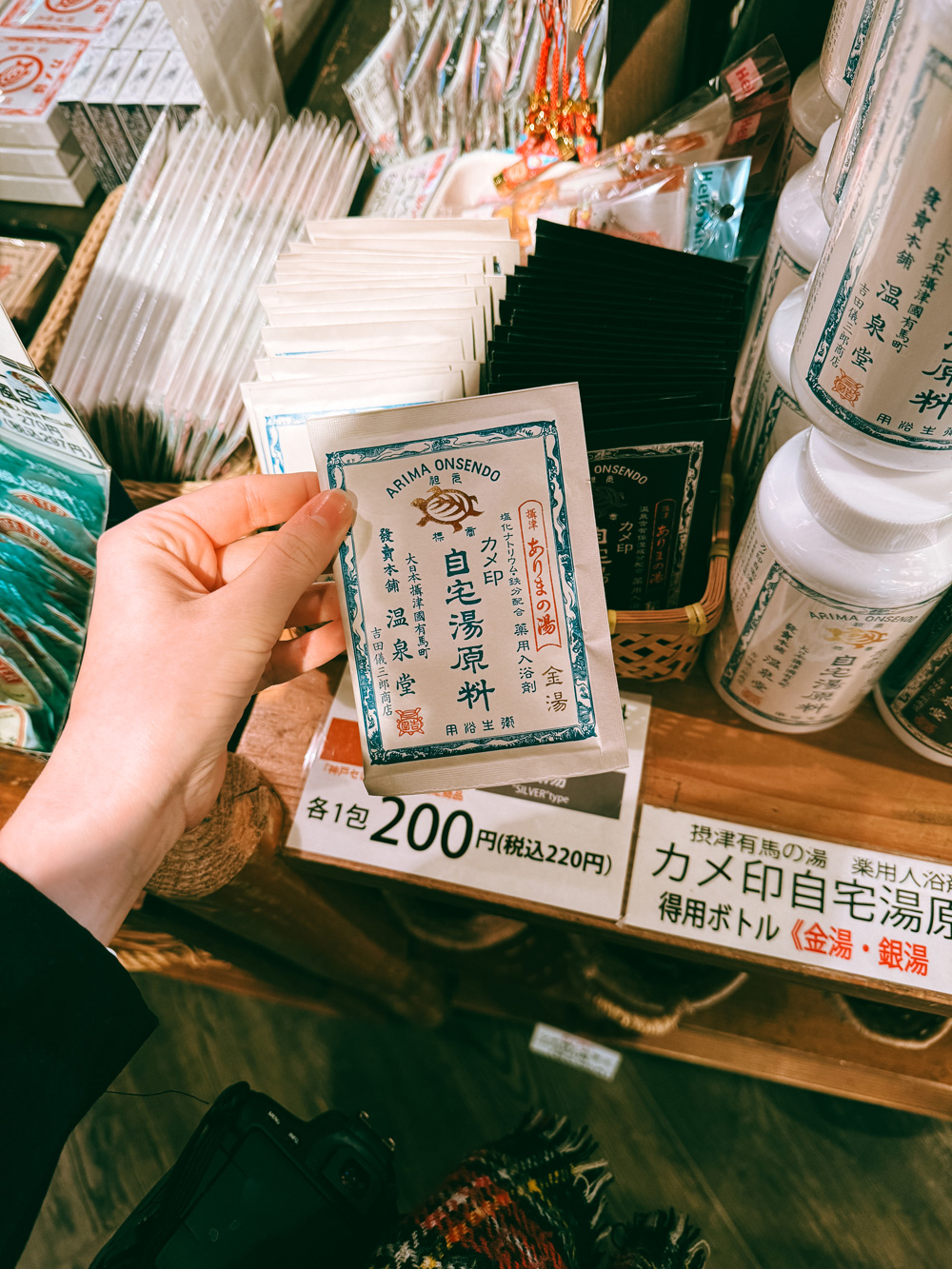
One product that stood out to me most were the Kamejirushi Home Bath Salts made from the onsen water in town. They include the minerals found in the golden and silver water, so you can bathe in them at home. They also have a variety of cosmetic products (including the Kamejirushi Beauty Soap) that also include the healing minerals of the hot spring water.
Is One Day in Arima Onsen Enough?
Arima Onsen isn’t very big, and because it has multiple public baths that let you enter as a day guest, one day is usually enough.
Staying overnight can add a lot of value to your stay, even though Arima Onsen’s accommodation can be on the more expensive side. The town has some beautiful luxurious ryokans to choose from, some of which offer private onsen too. During my visit to Arima Onsen, I stayed at Arimasansoh Goshobessho, which turned into one of my favourite stays I’ve had in Japan.
How to Get to Arima Onsen
Depending on where you’re travelling from, there are multiple ways to get to Arima Onsen. Below, I’ve broken down the best ways to do so from Kobe, Osaka and Kyoto.
How to Get to Arima Onsen From Kobe
If you’re ready in Kobe, it only takes about 30 minutes to get to Arima Onsen by metro/train and will cost ¥690. You will have to transfer a few times, but it’s very straightforward.
From Shin-Kobe or Sannomiya Station, you can take the metro to Tanigami Station. Change to the Shintetsu Arima-Sanda Line to Arimaguchi Station, where you change to the Arima Line to get to Arima Onsen Station. I used this route to get to Arima Onsen and it was very easy to do so.
There is also an express bus that can take you from Sannomiya Station to Arima Onsen. This will also take around 30 minutes.

How to Get to Arima Onsen From Osaka
The easiest way to get to Arima Onsen from Osaka is by using the highway bus. They depart from Hankyu Umeda Station/JR Osaka Station and Shin-Osaka Station. The journey takes around 50–60 minutes and will cost between ¥1,250 and ¥1,400. These are reserved buses, so make sure you pre-book your seats (either online or at the station). I used the bus to get back to Osaka after my stay in Arima Onsen and it was a very comfortable ride.
Alternatively, you can use the metro/train to get to Kobe and then use the same metro/train route as described in the section above. This will however include a lot of transfers, so I would stick with the express bus instead.


How to Get to Arima Onsen From Kyoto
Similar to Osaka, multiple highway buses travel from Kyoto Station to Arima Onsen. The journey takes around 70 minutes and costs ¥1850. Again, it’s important to pre-book your seats, as these are reserved buses only. It’s by far the easiest and most comfortable way to travel to Arima Onsen.
You can also take the Shinkansen to travel to Shin-Kobe Station from Kyoto. After that, you can use the metro/train route I described above. But again, this includes a lot of transfers and will take just as long as the express bus, so it may not be worth the hassle.
Conclusion – Is Arima Onsen Worth Visiting?
Arima Onsen has a lot of historical value, being one of the three ancient hot springs with over 1,300 years of history. The unique golden and silver hot spring water also makes it worth visiting, especially if you like hot springs.
To top it off, it’s relatively easy to get to from nearby cities, making it a good option for a day trip – especially if you’re already in the Kansai Area and are eager to try Japanese onsen. It can be a great addition to your Japan itinerary.
If you’re in the Kansai Area and are looking for another overnight onsen stay, I’d recommend checking out Kinosaki Onsen too. It’s a tattoo-friendly hot spring town in North Hyogo with seven public baths. Staying in one of the 70+ ryokans overnight gets you an onsen pass, giving you free access to all seven public baths during your stay.