<div class="container">

    <article>

        <header>

            <h1>Beyond El Salvador: Which Nation Will Be the Next to Adopt Bitcoin as Legal Tender?</h1>

            <div class="meta-info">

                <span><strong>By:</strong> Financial Technology Analyst</span>

                <span>•</span>

                <span><strong>Reading Time:</strong> 6 min read</span>

                <span>•</span>

                <span><strong>Category:</strong> Global Macro & Crypto Policy</span>

            </div>

        </header>
<!-- Featured Image Placeholder -->

        <div class="featured-image-placeholder">

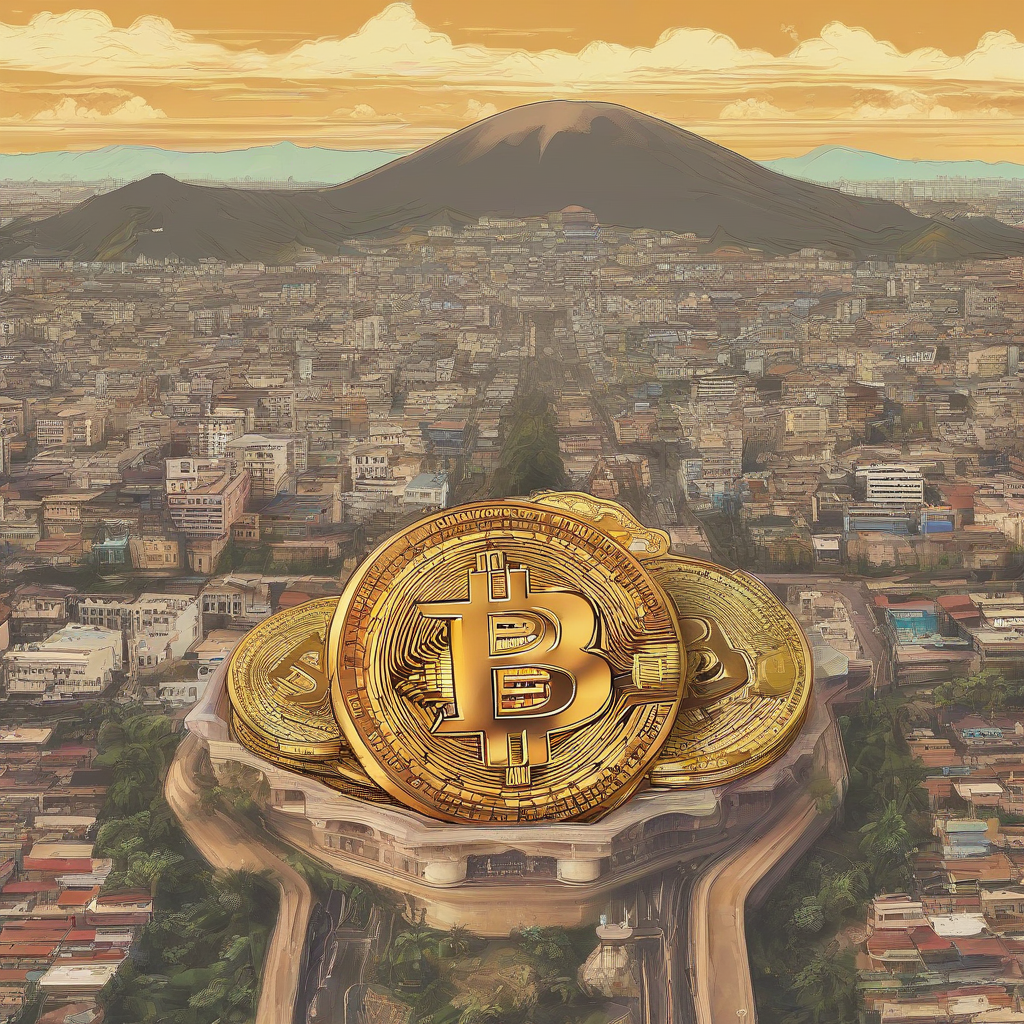
            Beyond El Salvador: The Global Race for Bitcoin Adoption

        </div>
<p>In September 2021, El Salvador made history. Under the leadership of President Nayib Bukele, the small Central American country became the first nation-state in the world to adopt Bitcoin (BTC) as legal tender. At the time, global financial watchdogs like the IMF and the World Bank warned of economic catastrophe. </p>
<p>Fast forward to the present day: El Salvador is thriving, bolstered by a tourism boom, volcano-powered mining operations, and a treasury sitting on massive unrealized Bitcoin profits. What once seemed like a radical, isolated experiment has now become a viable blueprint for monetary sovereignty. </p>
<p>This raises the ultimate question in macroeconomic circles: <strong>Who is next?</strong> As fiat currencies inflate and global tensions rise, several nations are emerging as prime candidates to follow in El Salvador's footsteps.</p>
<blockquote>

            "The game theory of Bitcoin is officially in play. Once one country adopts it, the opportunity cost for the second, third, and fourth countries to remain on a legacy fiat standard increases exponentially."

        </blockquote>
<h2>The Catalyst: Why Nations Look to Bitcoin</h2>

        <p>Before examining individual countries, we must understand the geopolitical and economic drivers pushing governments toward a Bitcoin standard:</p>

        <ul>

            <li><strong>Hyperinflation & Currency Collapse:</strong> When a national fiat currency fails to store value, citizens and governments look for stable alternatives.</li>

            <li><strong>Heavy Remittance Reliance:</strong> Many developing nations lose up to 20% of their GDP to intermediary fees (like Western Union) when citizens send money home from abroad. Bitcoin’s Lightning Network cuts these fees to pennies.</li>

            <li><strong>De-Dollarization:</strong> Rising geopolitical tensions have forced countries to seek alternatives to the US dollar-dominated SWIFT system to protect against sanctions.</li>

            <li><strong>Financial Inclusion:</strong> In regions where over 50% of the population is unbanked, a mobile phone and a Bitcoin wallet can instantly integrate citizens into the global economy.</li>

        </ul>
<h2>The Top Contenders for Next Legal Tender Status</h2>
<h3>1. Argentina: The Libertarian Experiment</h3>

        <p>With the election of libertarian, pro-Bitcoin President <strong>Javier Milei</strong>, Argentina has vaulted to the top of the watch list. Argentina has battled triple-digit inflation for years, forcing its citizens to become some of the most active crypto users in the world.</p>

        <p>While Milei’s immediate priority has been the deregulation of the economy and potential dollarization, Argentina has already passed laws allowing contracts to be settled in Bitcoin. Given Milei's vocal support for the philosophy of decentralized sound money, making Bitcoin legal tender as a parallel currency alongside the US Dollar or the Peso is a highly plausible next step.</p>
<h3>2. Paraguay: The Green Energy Powerhouse</h3>

        <p>Paraguay is a dark horse in the race. The country possesses an immense surplus of clean, renewable hydroelectric energy, primarily from the Itaipu Dam. This has turned Paraguay into an international hub for industrial-scale Bitcoin mining.</p>

        <p>Politicians in Paraguay have repeatedly introduced bills to regulate and embrace crypto assets. If the country decides to monetize its energy surplus directly on its national balance sheet—much like El Salvador does with its geothermal energy—formalizing Bitcoin as legal tender would be a logical leap.</p>
<h3>3. Tonga: The Remittance Champion</h3>

        <p>The Kingdom of Tonga, a Pacific island nation, is heavily dependent on remittances, which make up roughly 40% of its GDP. Former Tongan Member of Parliament, <strong>Lord Fusitu'a</strong>, has been a tireless advocate for adopting the "El Salvador model."</p>

        <p>Fusitu'a has drafted legislation and laid out a multi-step plan to use Tonga’s volcanic energy to mine Bitcoin and use the digital asset to completely bypass the expensive remittance pipelines. In a nation where almost everyone has a smartphone but few have bank accounts, Bitcoin represents immediate financial freedom.</p>
<h3>4. Turkey: Embracing Crypto out of Necessity</h3>

        <p>Turkey presents a unique case. The Turkish Lira has suffered severe devaluation over the last decade, driving a massive grassroots adoption of cryptocurrency. Unlike El Salvador, where adoption was top-down, Turkey’s adoption is bottom-up.</p>

        <p>While President Recep Tayyip Erdoğan was initially hostile toward crypto, the government has softened its stance, focusing on regulation rather than bans. If inflation remains unchecked, Turkey may eventually be forced to legitimize the de-facto Bitcoin standard already adopted by its youth and merchant classes.</p>
<h2>The Geopolitical Stumbling Blocks</h2>

        <p>Despite the benefits, the path to adoption is fraught with roadblocks. Any nation attempting to adopt Bitcoin faces severe pushback from the <span class="highlight">International Monetary Fund (IMF)</span> and the World Bank. These organizations have previously threatened to withhold credit lines and aid from countries that embrace decentralized assets.</p>

        <p>Furthermore, the inherent price volatility of Bitcoin remains a hurdle for risk-averse politicians who fear public backlash during a crypto "bear market."</p>
<h2>Conclusion: A Matter of When, Not If</h2>

        <p>El Salvador proved that a sovereign nation could adopt Bitcoin, survive the initial media onslaught, and come out economically stronger on the other side. The psychological barrier has been broken.</p>

        <p>Whether the next nation to adopt Bitcoin is a Latin American country fighting inflation, a Pacific island cutting remittance costs, or a European nation seeking financial neutrality, the trend is clear. Bitcoin is no longer just a speculative asset for retail investors—it is becoming a sovereign strategy.</p>
<div class="cta-box">

            <h3>What do you think?</h3>

            <p>Which country will be the next to adopt the Bitcoin standard? Will it be a major economy, or a smaller nation looking for an asymmetric advantage? Leave your thoughts in the comments below!</p>

        </div>

    </article>

</div>