Visiting Tokyo for the first time and not sure where to start planning? I’ve put together this 6 day Tokyo itinerary for first-time visitors to help!
Tokyo is my favourite city in the world. Most of my trips to Japan end or start with some time in Tokyo, and despite having visited so many times (including living there for over a month during one of my extended Japan trips), there is still so much left to explore.
A trip to Japan isn’t complete without spending at least some time in Tokyo, especially if it’s your first time. But where do you even start when it comes to Tokyo? Planning time in a city this big can be intimidating!
That’s why I put together a six-day Tokyo itinerary for people who are visiting this lively city for the first time. Below, you can find an in-depth breakdown of all the stops, along with essential travel info to make your time in Tokyo as stress-free as possible.
Let’s not waste more time, and dive in!
6 Days in Tokyo – Overview & Map
Tokyo is one of the largest cities in the world, so even with six days, it can be difficult to see it all. This city really has something for everybody, so I’ve tried to include a mix of everything. But remember, this is your holiday, so feel free to alter this itinerary to your wishes and preferences.
In this Tokyo itinerary, you’ll spend five days in the city exploring different areas. On the last day, you can take a day trip from Tokyo. I’ve included multiple day trip options, so you can pick one that fits your interest best.
During the six days, you can stay in the same hotel so you don’t have to worry about moving your luggage around. Further down the article, I go over my favourite hotels in Tokyo, but you can also check out my separate accommodation guide.
The map below includes all the highlights of this Tokyo itinerary. If you download Google Maps (one of my favourite travel apps in Japan), you can use the interactive map during your trip. I’ve included some of my favourite shops, restaurants, cafes and viewpoints along with the main tourist sights.
Day 1 – Pink
Day 2 – Yellow
Day 3 – Teal
Day 4 – Green
Day 5 – Dark Blue
Day 6 – Light Blue (not all options fit on the screenshot of the map)
Looking for More Japan Travel Guides?
If you’re looking for more travel advice and free itineraries for your trip to Japan, check out some of the following guides:
- Planning your first trip to Japan and want to see more than just Tokyo? Our 2 week Japan itinerary takes you along the golden route, including Tokyo, Kyoto, Osaka, Nara, Hiroshima and more.
- Want to spend even more time in Japan? We have a 3 week itinerary that includes even more iconic spots, including some off the Golden Route.
- Interested in some extra evening options in Tokyo? Check out our guide to the best things to do in Tokyo at night.

Stay connected to the internet during your trip to Japan (essential for using apps like Google Maps & Translate!) with Pocket WiFi. Use code THENAVIGATIO15 for 15% off Ninja WiFi Pocket WiFi.
6 Day Tokyo Itinerary for First Time Visitors
Here is my in-depth itinerary on how you can spend six days in Tokyo:
Day 1 – Meiji Jingu Shrine, Harajuku & Shibuya
On the first day of this itinerary, we explore Harajuku and Shibuya. There is quite a lot to see in these districts, so prepare to get your steps in!
Meiji Jingu Shrine
We start our time in Tokyo at one of the largest and most iconic shrines of the city: Meiji Shrine. Located only a few minutes on foot from Harajuku Station, it’s easy to get to no matter where you’re staying in Tokyo.
You’ll be welcomed by a large wooden torii gate at the entrance of the park in which the shrine is located. The shrine is free to visit and is open to visitors from dawn to dusk.
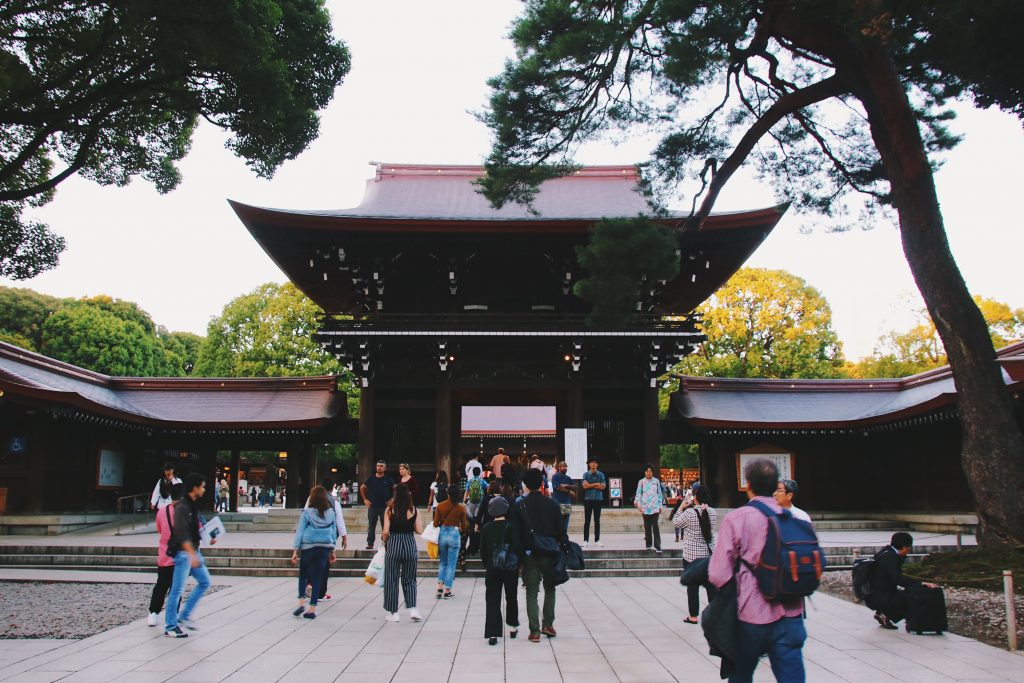
Meiji Shrine is dedicated to the spirits of Emperor Meiji and his wife. It was completed in 1920, eight years after his passing. After entering the temple grounds through the beautiful torii gate, you can enjoy a serene walk through a beautiful forest made out of more than 100,000 trees. It’s easy to forget you’re in one of the busiest metropolitan cities in the world!
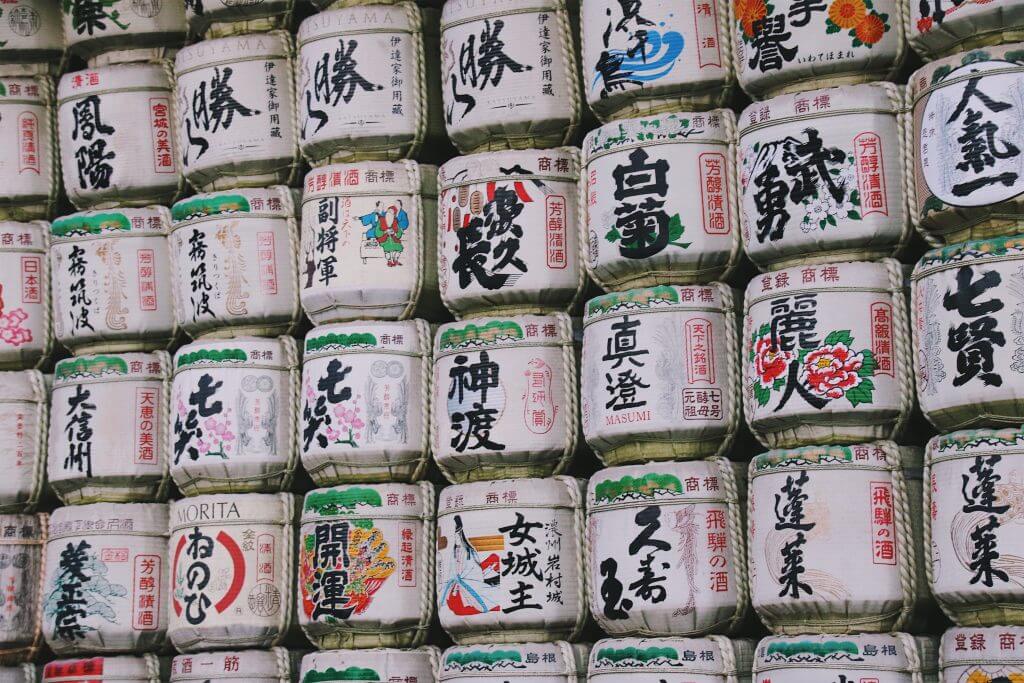
While walking through the forest towards the inner shrine, you’ll walk past a wall of beautifully decorated sake barrels. Not only are they a treat to look at, but these barrels also symbolise the spiritual connection between the people and the Shinto Gods. Drinking Japanese rice wine (sake) was believed to bring people closer to the Gods.
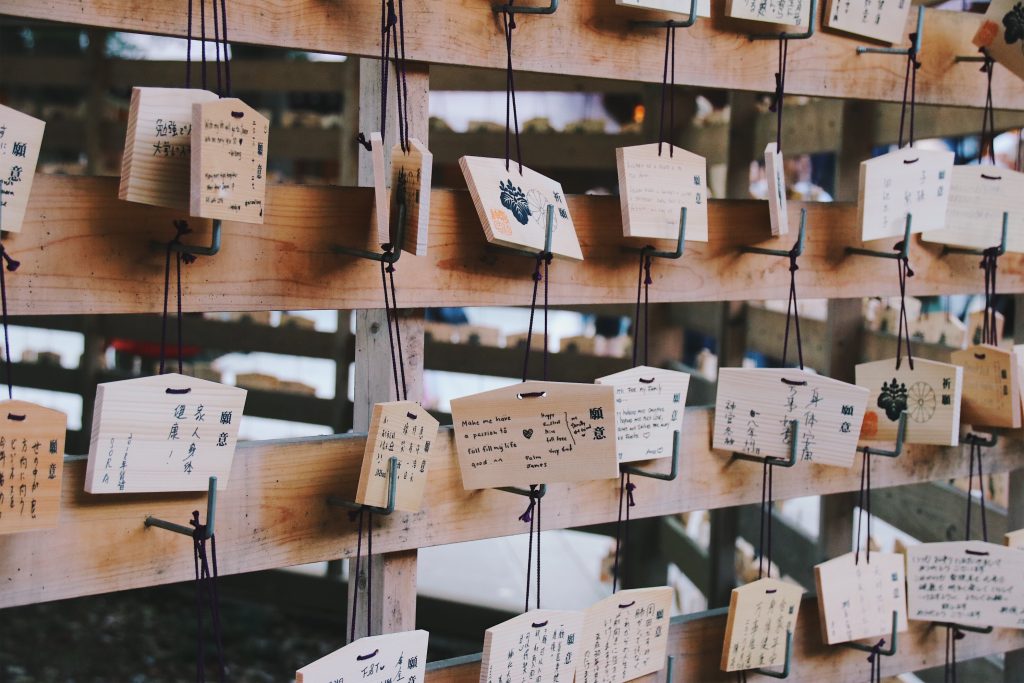
When you arrive at the main building of the Meiji Jingu Shrine, you might see a bunch of wooden plaques hanging closely together. These are called Ema plaques and are part of a Shinto ritual. You can buy one for a few hundred yen, write down a wish or prayer and hang it with the others. The profits are used to maintain the shrine and its gardens.
Exploring Harajuku
After visiting Meiji Shrine, walk back towards Harajuku Station. It’s time to explore the Harajuku District. Harajuku refers to the area between Shinjuku and Shibuya, near Harajuku Station, and is known for its quirky shops, vibrant fashion and pop culture.
Start with Takeshita Street, probably the most famous street in Harajuku. Do prepare for some crowds on this street, it can get so busy that it’s hard to walk through it sometimes. You can also find some affordable secondhand kimono here (Chicago Inc. is a good spot for this!).
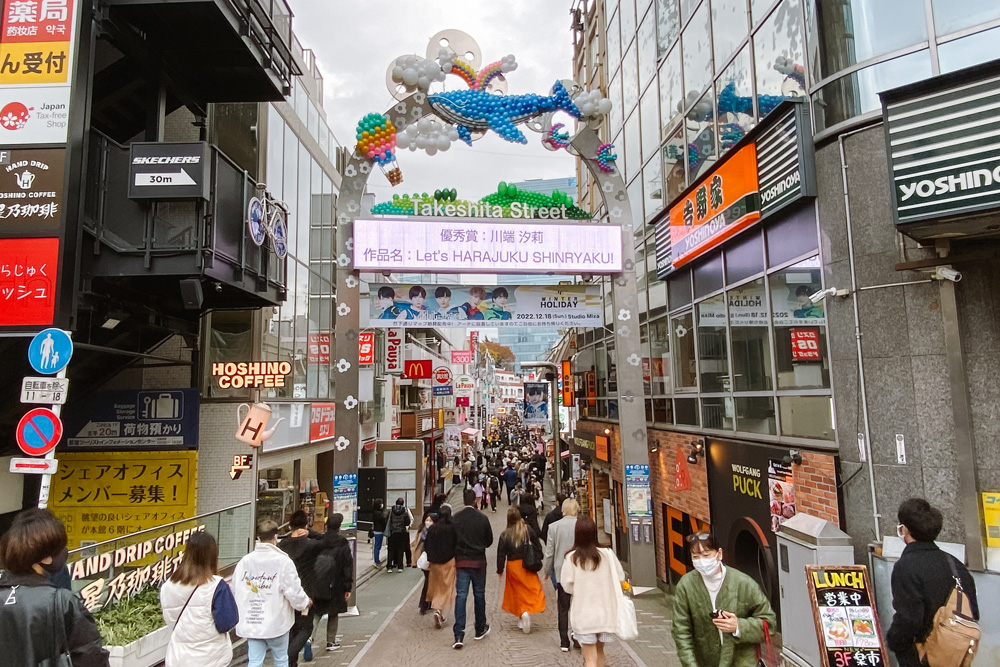
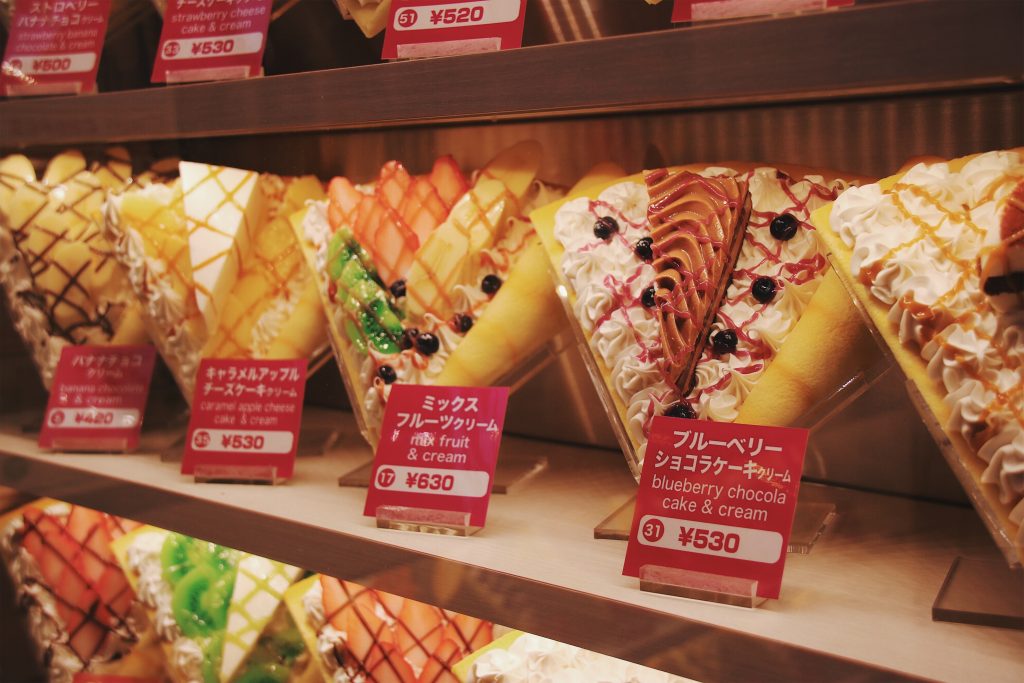
You can find some great street food here as well, including the popular Harajuku Crepe and Rainbow Cotton Candy. You can get the crepes with countless different fillings, sweet or savoury.
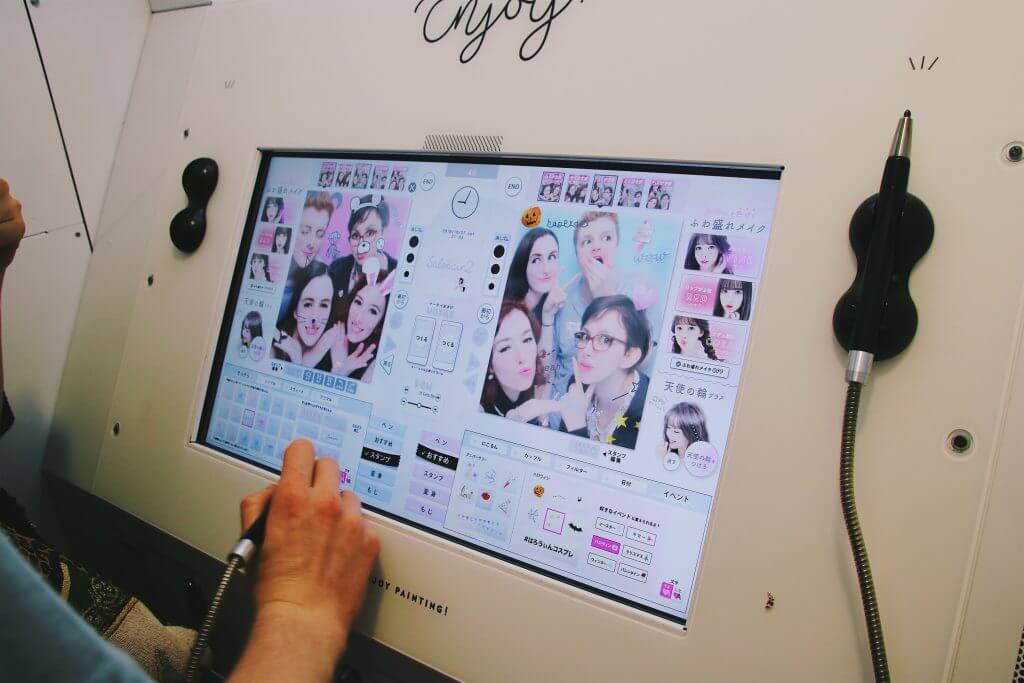
Harajuku also hosts a variety of Purikura booths, which can be fun to try. It’s similar to a photobooth, but they allow you to edit your photos afterwards (especially to look more cute, or kawaii). You can enlarge your eyes, add sparkles and get a printed copy when you’re done.
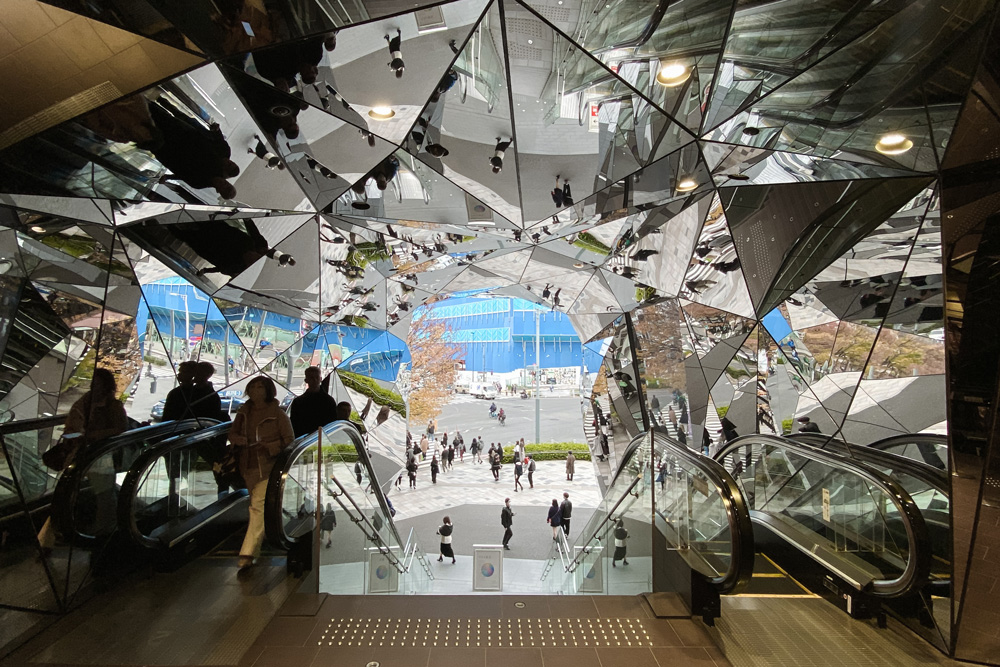
If time allows it, wander around Ura-Harajuku. You’d be surprised by how many great fashion stores, coffee shops, and other brands you can find on the back streets of Harajuku. B-Side Label is one of the shops I usually stop by to buy some stickers – they’re worth a visit for sure!
Walk further down to get to Omotesando, another popular shopping area. Here, you can find more upscale and luxury brands than in Harajuku.
Shopping in Shibuya
After Harajuku, we move onto Shibuya. You can either take the Yamanote Line from Harajuku Station to Shibuya Station, or you can walk, which should only take 10–15 minutes. It’s a great way to see some more of the city, so I’d recommend walking!
Shibuya has a host of great shops to check out, including:
- Pokémon Center Shibuya: On the 6th floor of the Shibuya Parco shopping centre, you can find Shibuya’s Pokémon Center. Along with all the merchandise you can buy here, there’s a large Mewtwo statue outside.
- Nintendo Tokyo: Next to the Pokémon Center, Shibuya Parco also houses the Tokyo Nintendo Store. As you probably expect, they sell games and lots of merchandise of your favourite Nintendo franchises.
- Village Vanguard: A variety of pop culture items and souvenirs.
- MUJI: They sell a wide variety of items, focussed on minimalist design.
- Disney Store: Shibuya also has a Disney Store with an amazing storefront. Even if you’re not planning to buy anything, it’s worth stopping by just to see it.
- Tokyu Hands: Another large household store, including stationary, DIY and craft items.
- MODI: A large mall with fashion stores, restaurants, bookstores and more.
- Mega Don Quijote: Large store selling pretty much anything you can think of, great for souvenirs.
- Shibuya 109: This building is filled with smaller boutiques. It’s fun to browse, but I personally think it’s a little overhyped.
Shibuya Scramble
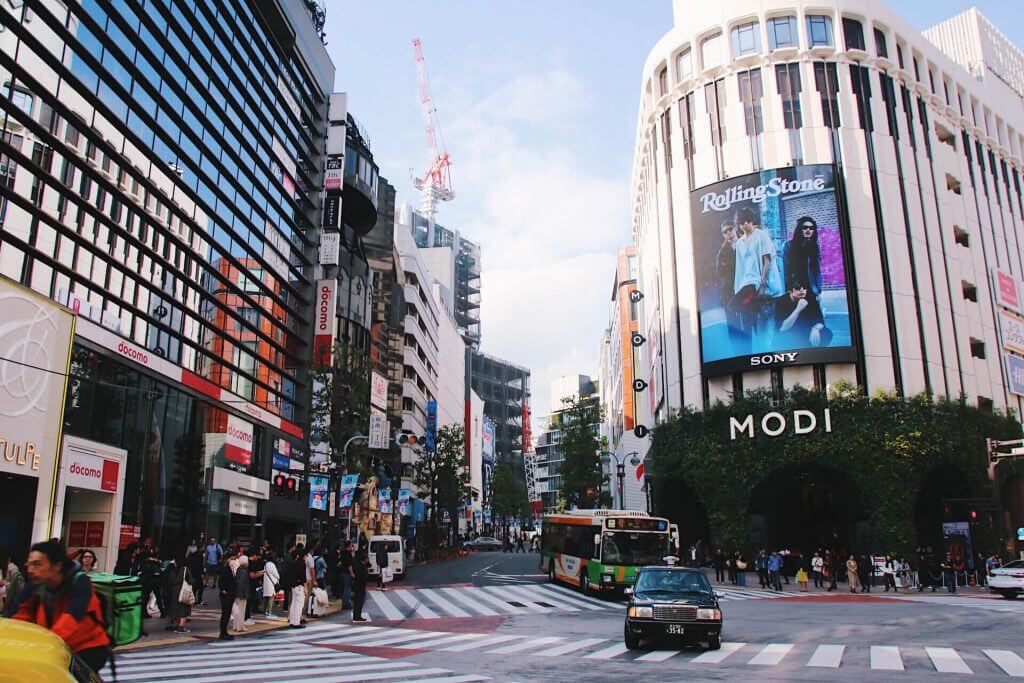
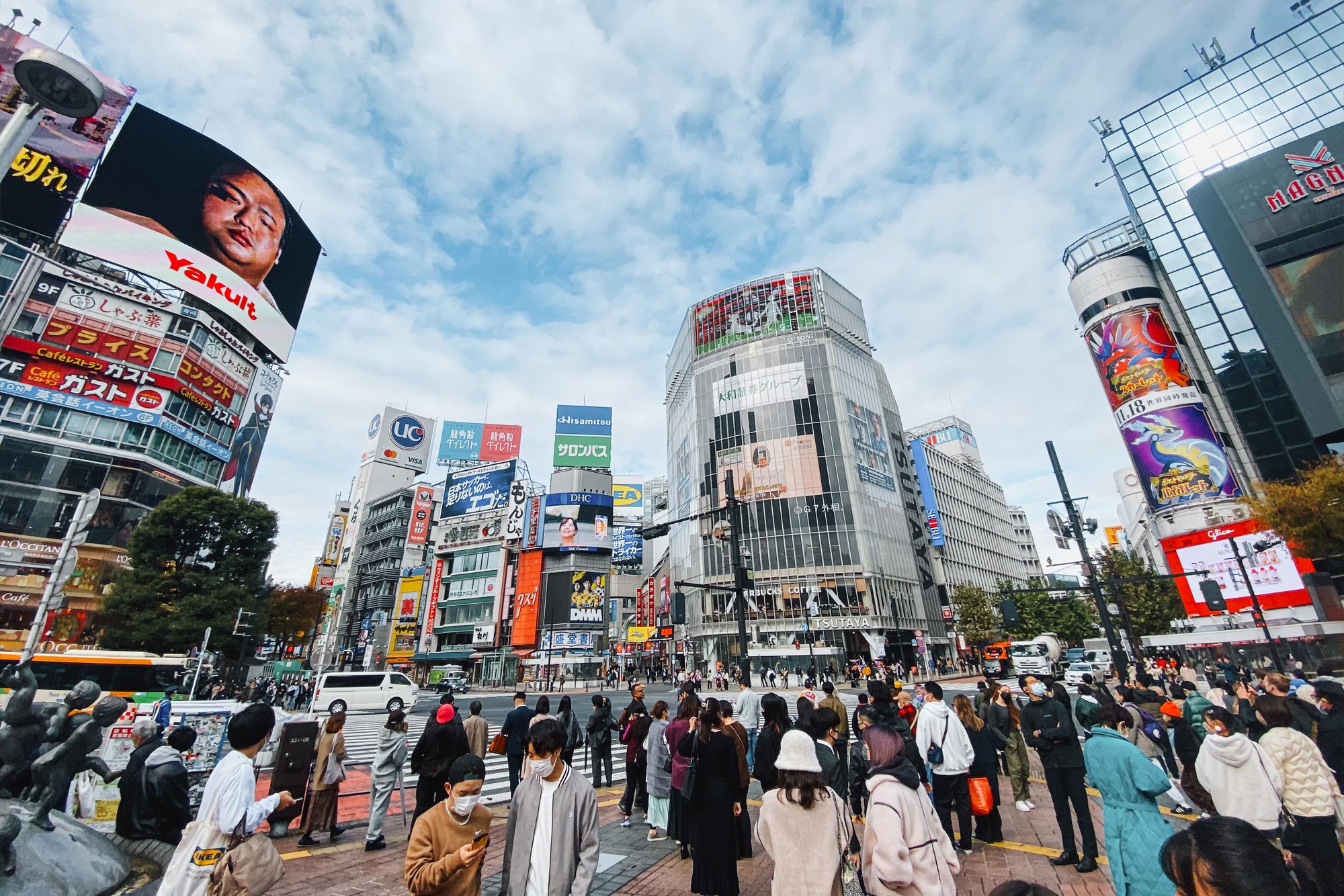
Then it’s time for the famous Shibuya Scramble. Yes, it’s just a crossing in a busy area, but it really does give you that “I’m in Tokyo” feel. Up to 3,000 people can cross the street here at the same time, making it the busiest crossing on the planet.
As soon as the traffic lights allow pedestrians to cross, a sea of people washes over the street. Especially during your first time in Tokyo, walking among the crowds is quite remarkable – one for the Tokyo bucket list for sure.
While walking the crossing is great, seeing it from above is even better. There are some lovely cafes and bars nearby from where you can get a great view of Shibuya Scramble. The Starbucks across from the station is a popular spot, plus it’s been recently renovated.
If you are following this Tokyo itinerary, you’ll also get a great view of Shibuya Crossing when visiting Shibuya Sky, which is one of the next activities.
Hachiko Statue
Hachiko Statue outside of Shibuya Station is a popular meeting spot in Tokyo, but when you’re near Shibuya Crossing, you may as well stop by too. You might have seen the movie or heard the story of Hachiko. If not, here is the tale of this famous Akita dog:
Hachiko’s master, Professor Ueno of the Tokyo Imperial University, would take the train from Shibuya Station to his work every day. Hachiko would meet him at the station every day.
Sadly, Professor Ueno passed away, but Hachiko continued to show up every day, even after his master’s death. The statue was created to commemorate his loyalty, and this beloved dog is now the mascot of the Shibuya area.
Enjoy the best views at Shibuya Sky
There are quite a few beautiful viewpoints in Tokyo, but Shibuya Sky is my favourite. This 360° panoramic view opened its doors to visitors in 2019 and has turned into a popular spot – and with good reason.
Located a stone’s throw from the Shibuya Scramble, Shibuya Sky sits on the 47th floor of the Shibuya Scramble Square Tower. At 229 meters, this viewing platform lets you see as far as Mount Fuji on a clear day.
I recommend going just before sunset hours. Seeing the sunset over Tokyo is magical! Since you have to book a timed entree ticket, you can check the sunset time for your preferred day before booking.
Once you get up there, you can stay as long as you want, so it’s best to get a ticket for 30–60 minutes before sunset so you have enough time to get up there.
With views this beautiful, Shibuya Sky is a popular sight to visit so pre-booking is essential. Tickets on the day sell out quickly, and once they’re gone, you won’t be able to enter anymore.
Wander through Centre Gai
Once you’ve enjoyed the sunset at the top of Shibuya Sky, it’s finally time for some dinner. Since we’re already in Shibuya, I recommend walking towards Centre Gai. This lively street is filled with bars, izakayas, cafes and restaurants. There are some great spots for ramen, conveyor-belt sushi (a must-try when in Japan!), udon and more.
Day 2 – Shinjuku
Our second day in Tokyo will be spent in Shinjuku. While it’s possible to cramp Shinjuku, Shibuya and Harajuku into one day (since they’re very close to each other), you’d have to skip a lot of highlights. And since we have six days in Tokyo, we’ll split them up to make the most of these iconic areas.

Shin-Okubo, also known as Korea Town, is located just above Shinjuku. If you’re into K-Beauty, K-Pop or Korean cafe culture, you can also spend a few hours here before heading towards Shinjuku. It’s a great spot to stock up on skincare!
Walk Through Shinjuku Gyoen National Park
Even though Shinjuku is one of the busiest and most lively parts of Tokyo, it also has a beautiful green oasis where you can enjoy some peace and quiet. In this park, you can find a variety of French, English and Japanese gardens. As well as some beautiful pagodas, ponds, a large greenhouse, teahouses and cafes where you can buy fresh ice cream and mochi.
Shinjuku Gyoen Garden is one of Tokyo’s largest and most beloved parks. In spring, it turns into one of the best places to enjoy the blossoms, especially since there are a variety of blossom trees spread across the park, each blooming at a different time. Autumn is another great time to visit this park, as the autumn foliage is almost just as beautiful.
At 144 acres, Shinjuku Gyoen is massive. But despite the size, you can see the skyscrapers in the backdrop of the park – a quick reminder that you are still in one of the largest cities in the world.
In the middle of the park, you can also find a Starbucks, which gives you a lovely view of part of the park. During cherry blossom season, this coffee shop gets very busy, so you may want to grab a drink from the vending machine instead.
It costs 500 yen to enter, and the park is open every day (apart from Mondays) from 9AM. You can easily spend 2–3 hours here without getting bored.
Enjoy a Free View at the Tokyo Metropolitan Government Building
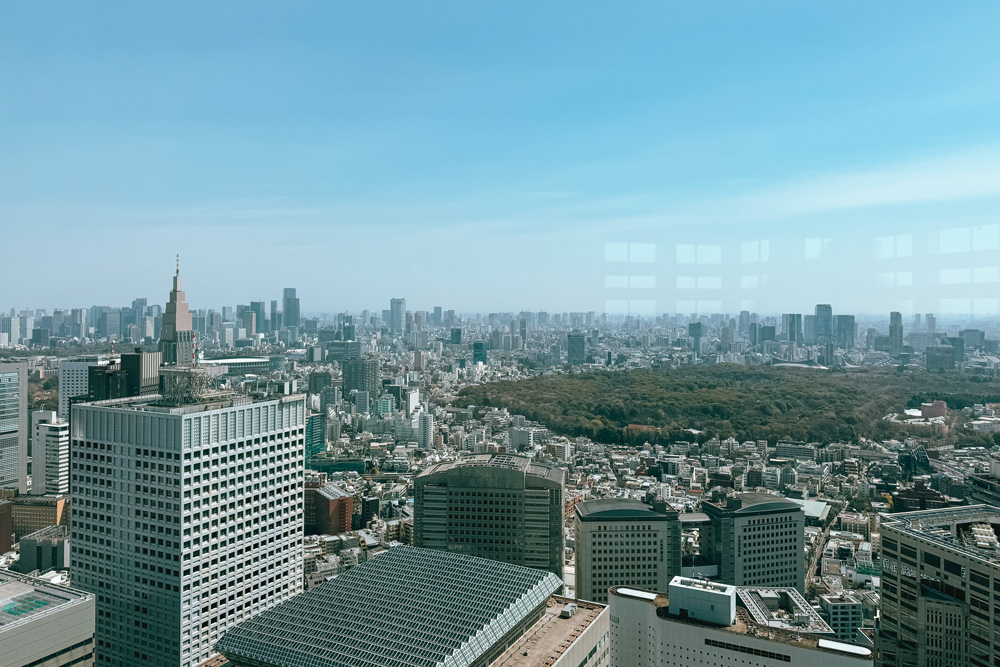
After some relaxing time in the garden, we head to the other side of Shinjuku Station. The Tokyo Metropolitan Government Building offers some great views of the city, and best of all, it’s completely free.
The building itself reaches 243 meters, but the free observation decks sit at 202 meters. More than high enough for some beautiful panoramic views for sure. If you happen to visit on a clear day, you can see as far as Mount Fuji. Some other famous landmarks can be spotted from here, including Tokyo Tower, the Sky Tree and Meiji Shrine.
After enjoying the view, you can also visit the two tourist information centres on the second floor of the building. One is dedicated to Tokyo, and the other one has information about every prefecture in Japan. If you’re planning to see more than just Tokyo, it can be a great spot to pick up some brochures or get some extra information.
Explore Kabukicho
In the evening, we’re heading towards Kabukicho in Shinjuku. This entertainment district in Shinjuku lights up at night, and there’s a lot to see and enjoy.
Kabukicho is known to be a bit stretchy, as it’s the red light district. However, you don’t have to worry! Just make sure you don’t get involved with people on the street trying to talk to you and get you to “have a drink at their bar”. It’s not a dangerous place, but it’s best to keep your wits about you. I’ve never had any issues visiting!
Before entering Kabukicho, stop by the Cross Shinjuku Vision billboard in front of the East exit of Shinjuku Station. This 3D billboard became famous for the cute 3D cat that shows up every now and then.
Walking through Kabuchiko, you can also see the iconic Godzilla head on top of the Gracery Hotel Shinjuku. Godzilla is the mascot of the Shinjuku area, and the massive head looks out over Kabukicho. The hotel itself has a rooftop bar next to the Godzilla head, and there are even some rooms inside that are Godzilla-themed.
Another note on Kabukicho is that despite Kabukicho Tower getting a lot of praise on social media, I personally didn’t like it at all. It looks pretty cool, but I found the arcade games to be very overpriced and it was overwhelmingly loud and crowded. It felt a bit like an overhyped tourist trap. I won’t be back there.
There are lots of other arcades nearby that can be a much better (and cheaper) option if you want to play some games. Make sure to check out more than just the first floor, as they’re often filled with claw machines only. Some more interesting games can be found from the second floor upwards.
Check out Omoide Yokocho or Golden Gai
For dinner and drinks, you can head towards either Omoide Yokocho or the Golden Gai.
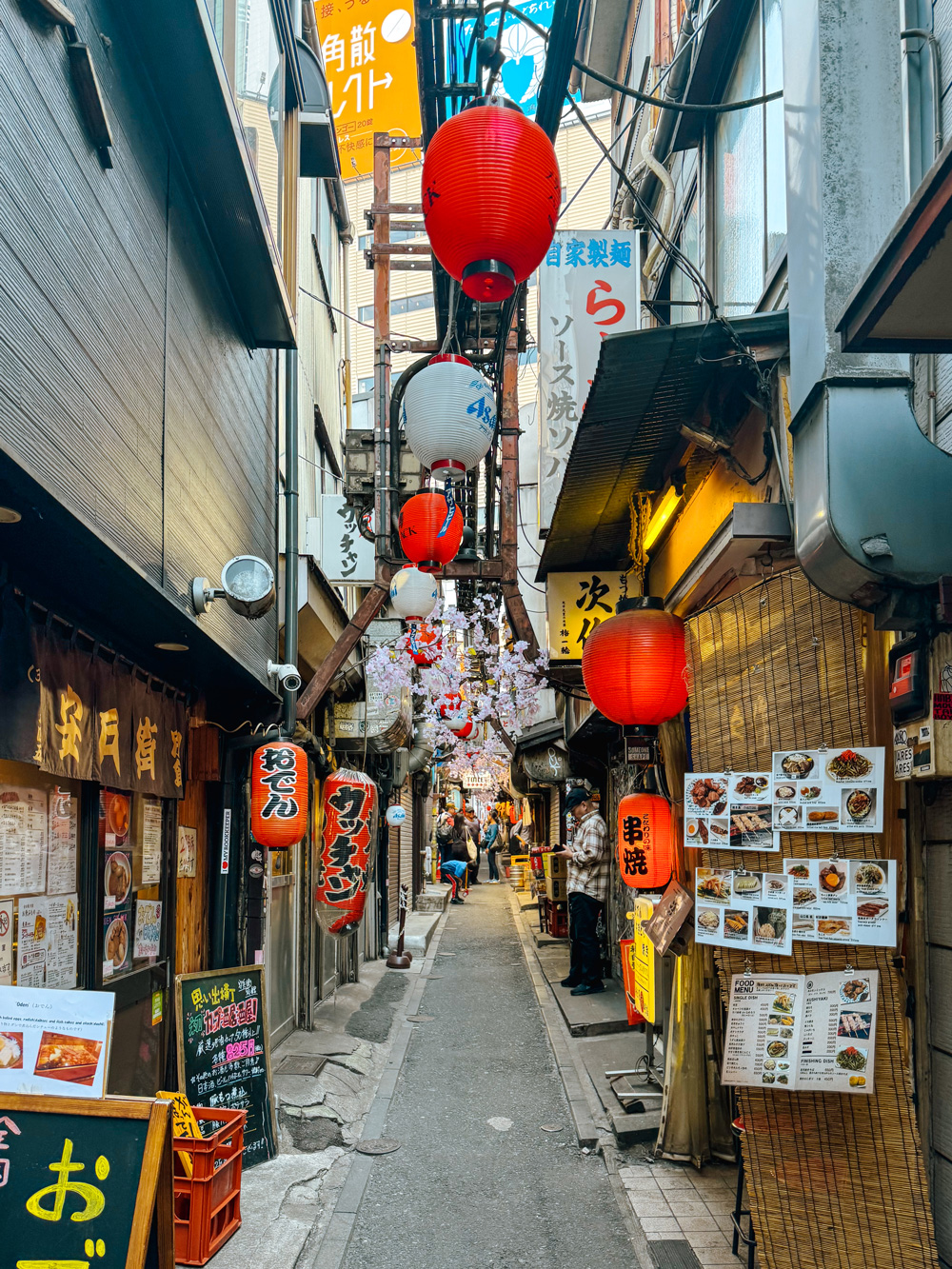
Omoide Yokocho is a narrow but extremely atmospheric alleyway near Shinjuku Station. Decorated with lanterns and seasonal decorations (cherry blossoms, autumn leaves…), it shows the contrast between old and new in Tokyo. Especially with the big neon advertising boards luring in the background.
You can find many traditional izakayas on this street. Small yakitori stands where smoke is being blown into the street from their grills. Sit down and enjoy some freshly grilled chicken skewers with a beer. Omoide Yokocho is open every day from 5PM till midnight.
Alternatively, you can head to Shinjuku’s Golden Gai. This area near Kabukicho has over 200 small restaurants and bars, giving you more than enough choices.
If eating at an izakaya seems a bit intimidating as a first-time visitor, you can book a guided tour of Omoide Yokocho and the Golden Gai. This 3-hour tour is a great way to experience it without having to worry about doing it all yourself.
Day 3 – Asakusa & Ueno
Since Asakusa is a more traditional part of Tokyo, this is also a great spot to try on kimono if this is something you’re interested in. There are multiple kimono rentals in Asakusa to choose from.
Walk through Nakamise Street
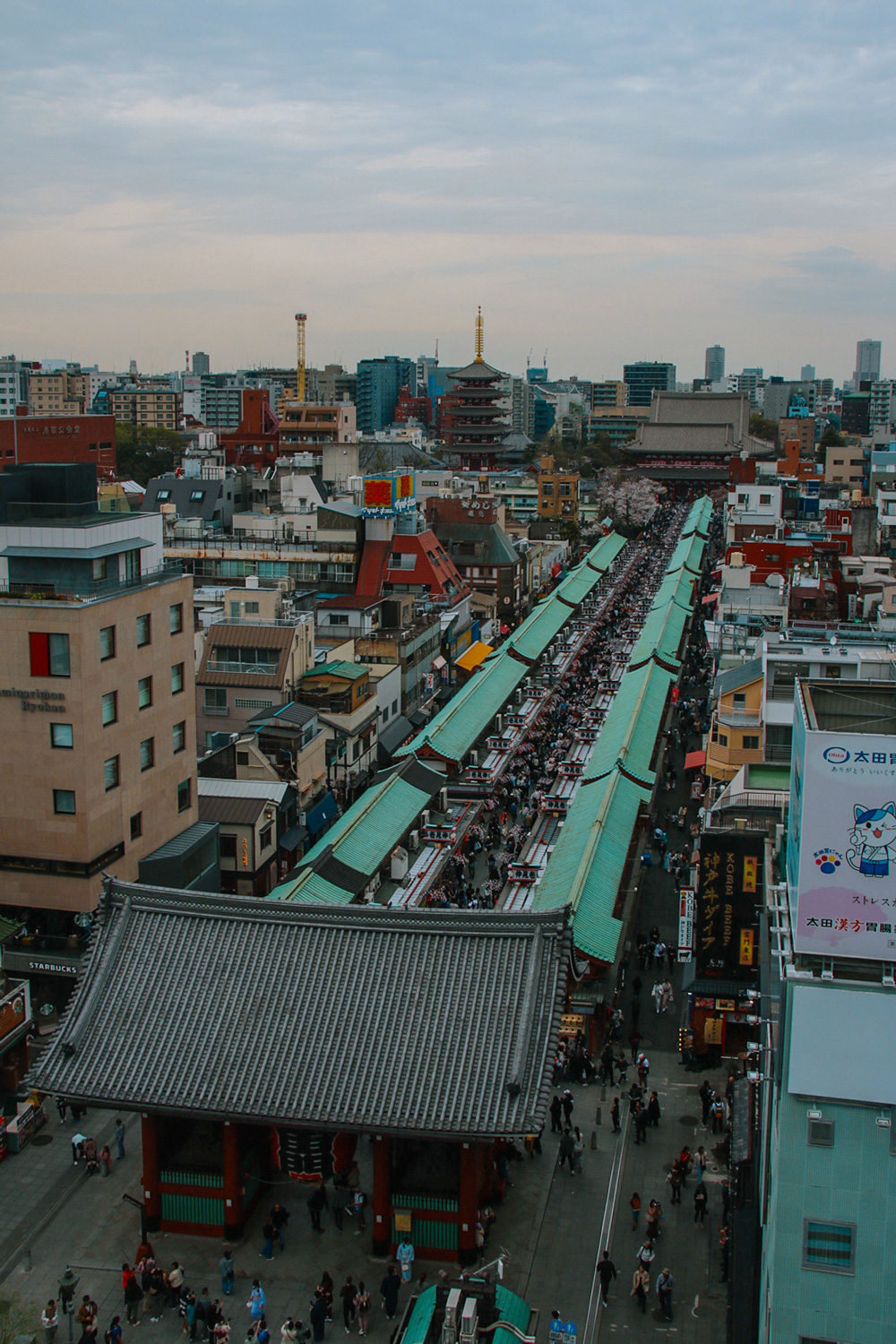
Around 250 meters long, Nakamise Street guides you to Sensoji Temple. You can find countless souvenir shops and street food vendors here. It can get a bit crowded here, so you can also walk at the back of the shops to have a bit more space. Most shops open around 10AM, so you can also arrive a bit earlier to avoid the big crowds.
In front of Nakamise Street, you can find the Asakusa Culture Tourist Information Center. It’s free to enter, and if you make it to the 8th floor, there is a free observation deck. Even though it’s nowhere near as high as the nearby Sky Tree, it gives you a lovely view of Nakamise Street leading towards Senso-ji.
Visit Senso-ji Temple
Senso-ji Temple (also known as Asakusa Kannon) is the oldest Buddhist temple in Tokyo, dating back to the year 645. Legend says the temple has been built for the goddess of mercy, Kannon.
Unsurprisingly, Senso-ji is one of the most popular sights in the city, so you can expect it to be quite busy. The earlier you can visit, the better. Alternatively, you can go later at night, when the temple is lit up beautifully.
The temple grounds are a treat to explore too. Alongside the main temple building, there are smaller temples, a pagoda and small gardens to enjoy.
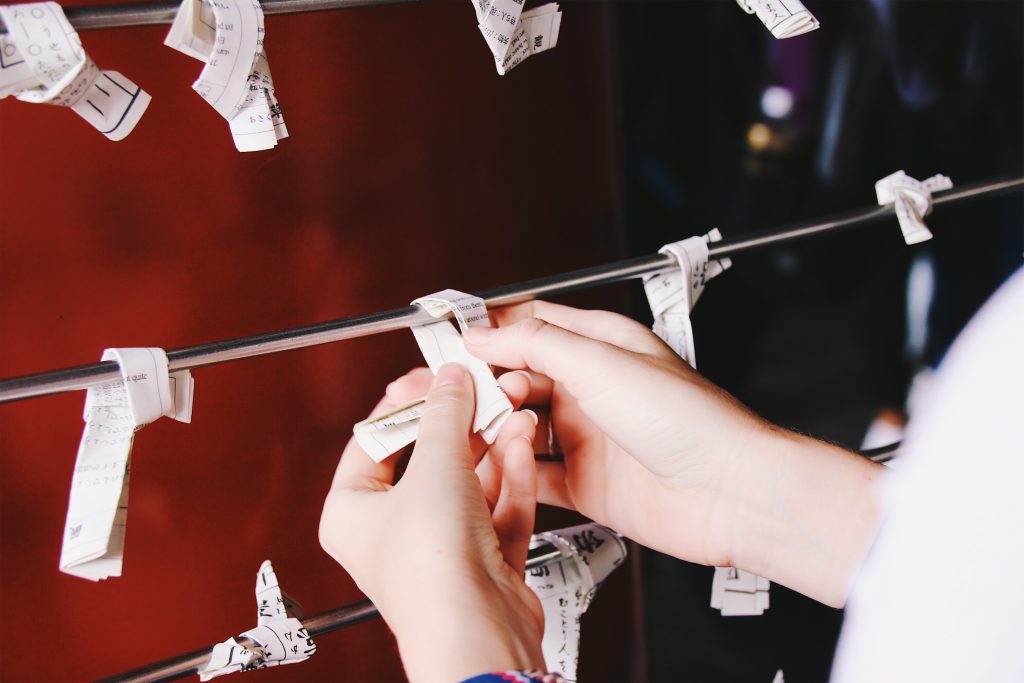
At Senso-ji, and many other temples across Japan, you can partake in a form of Japanese fortune-telling, called o-mikuji (おみくじ). Since I usually visit Senso-ji when I’m in Tokyo, it’s the one place I always try o-mikuji. It’s become a bit of a tradition!
The way it works is easy. You pay ¥100 and shake the wooden box filled with sticks. After shaking, you remove one of the sticks. This stick has a number written on it. You then match the number with the drawers and receive your fortune.
If you receive a bad fortune, you can tie the paper to one of the poles or a nearby tree. The idea is that the bad luck will stick to the poles or the tree instead of the person who drew it.
See Tokyo Sky Tree
Tokyo Sky Tree is not far from Senso-ji, making it a great next stop on your Tokyo itinerary. At 634 meters high, the Sky Tree is the tallest tower in Japan. At night, the tower lights up and follows different lighting schedules. You can check the official website to see what’s on.
There are multiple viewing spots in the Sky Tree, giving you a lovely view of the city. On the 340th floor, there’s even a small glass floor, showing you how high you really are. You can also find multiple restaurants and a Pokémon Centre in the Sky Tree.
If visiting the Sky Tree is something you absolutely want to do, it’s best to pre-book tickets as they can sell out quickly. However, if you’re following this Tokyo itinerary and have already visited Shibuya Sky, I don’t think it’s essential to go up the Sky Tree. It’s still very nice to see it from the streets of Asakusa though.
Go Knife Shopping in Kappabashi
From Asakusa, we’ll slowly make our way towards Ueno. But on the way, you can stop off at Kappabashi. This shopping street between the two districts is filled with around 170 kitchenware stores.
While this may sound a bit too niche, it’s the perfect spot to buy a Japanese knife, bowls, cups, chopsticks, chopstick holders and more. You can even find stores that sell the iconic plastic foods that you can see outside of most Japanese restaurants.
A lot of stores have English-speaking staff, which can be very helpful if you’re looking to buy a Japanese knife. Just remember that buying a knife for someone can be seen as bad luck in certain cultures – there are lots of other great gifts to pick up here though!
Some of my favourite shops on Kappabashi include:
- Kiwami: Japanese knife shop. They have English-speaking staff and are happy to explain everything you need to know before deciding on what knife to buy. We bought our knives here and have been super happy with them!
- Dengama: Ceramic store with lots of bowls and cups for sale. They also have a large variety of chopstick rests to choose from, they make for a perfect gift to bring home.
- Kamata: Japanese knife shop. While we didn’t end up buying knives here, they had English-speaking staff and a very good variety of knives available. Prices are also very reasonable.
- Komatsuya: Ceramic store with a large variety of beautiful bowls and cups.
- Union: Coffee speciality shop. Everything you need if you’re a coffee lover.
It’s a great place to pick up some gifts for friends and family. All ceramics are wrapped very well, and once you’ve rolled them in a few more clothes in your suitcase, they are very likely to survive the flight home. All mine arrived home without any cracks, and drinking my morning coffee from them is a treat every morning at home.


Visit Ueno Park
This large park near Ueno Station has quite a lot to offer. The Ueno Zoo can be found here, which is the country’s oldest zoo, dating back to 1882. I’m not the biggest fan of animal tourism, so I haven’t visited the zoo myself.
What is worth visiting in Ueno Park is one of the museums. In the park, you can find the Tokyo National Museum, the Tokyo Metropolitan Art Museum, the National Science Museum and the National Museum for Western Art. The National Museum is definitely worth a visit if time allows it.
Ueno Park is a popular cherry blossom viewing spot. With over 1,000 cherry trees, don’t miss it if you happen to visit between late March and early April (depending on the cherry blossom forecast). You can rent boats on the Shinobazu Pond too, which is especially beautiful when the blossoms are in full bloom.
You can find two of the Pokémon Manhole Covers in Ueno Park. These colourful manhole covers are scattered all across Japan, and if you’re a fan of the franchise (like me), they’re a fun thing to hunt down during your time in Japan. Don’t forget to join our Manhole Cover Club on Facebook and share your favourites!
Stroll through Ameyoko
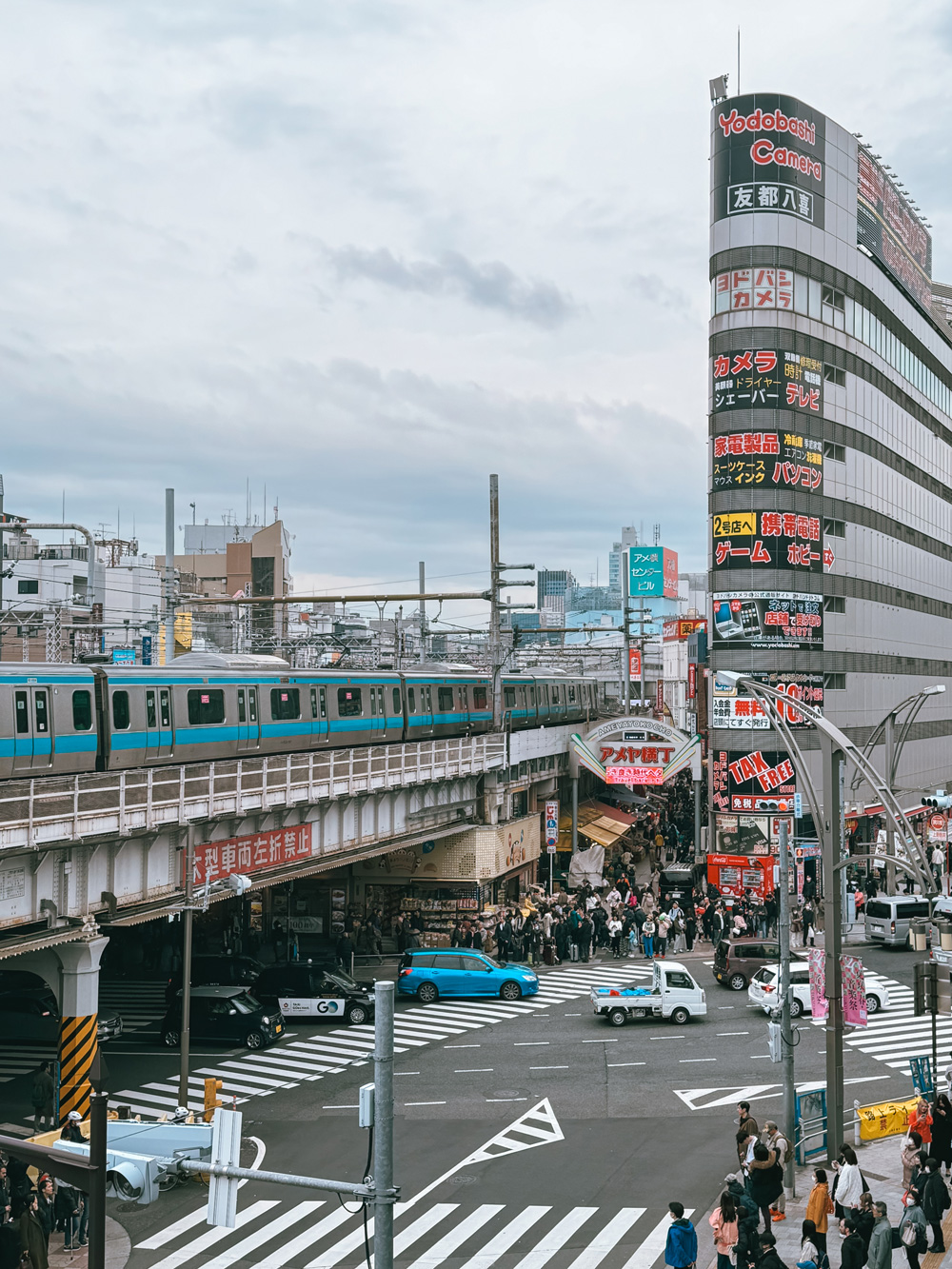
After Ueno Park, head South to wander through Ameyoko (short for Ameya Yokocho). This busy market street sells anything from fashion items to food and spices. It’s quite the experience, and you can get goods here for a bargain — you can even haggle if you’re up for it.
The market has been here since after WWII, when it used to be the black market. Most shops are open until 8PM and there’s some street food to be tried here too.
Day 4 – Tokyo & Akihabara
Today, we’ll see a mix of Tokyo: the old and the new. Since Tokyo is known to be a city of opposites, it fits quite well. In the morning, you can visit Tokyo Imperial Palace, and head to Akihabara Electric Town in the afternoon/evening.
Check out the Tokyo Station Building
Marunouchi, the area between Tokyo Station and the Imperial Palace is mainly a business area. However, since you can easily get to Tokyo Station on public transport, we start our day here.
Tokyo Station Building is quite unique too. Designated as an Important Cultural Property, this Western-style building made out of red bricks is the city’s transport hub. You can catch the JR lines, Tokyo Metro and the bullet train from here. On average, around half a million people use this station daily.
There is an underground mall under Tokyo Station. Inside it, you can find Character Street (home to 21 stores selling merch of your favourite animated characters), and Ramen Street (dare I say this doesn’t need any extra explanation).
Visit the Imperial Palace
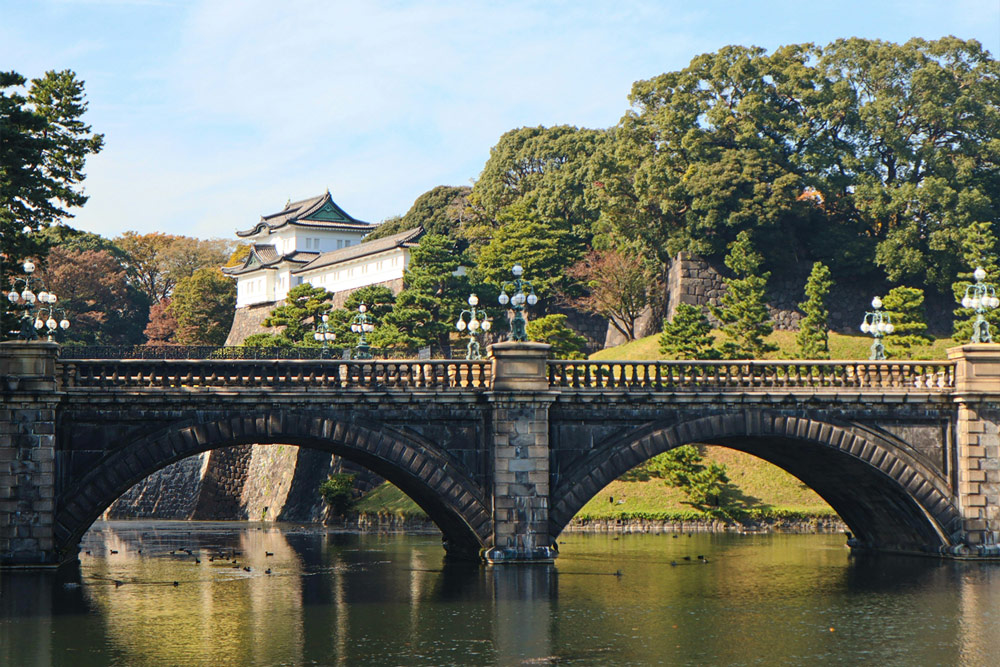
From Tokyo Station, you can walk along one straight road to get to Tokyo Imperial Palace.
Interestingly, the capital of Japan has changed quite a few times, as it depends on where the Emperor is living at the time. Until 1867, Kyoto was the Emperor’s home, which made it the country’s capital for years.
Since the Emperor moved to Tokyo in 1868, this has been Japan’s capital city since. The Imperial Family has been living at the Imperial Palace ever since. The palace was built on the grounds of Edo Castle, which used to be the home of the Tokugawa shogun.
To get the most out of your visit to the Imperial Palace, it’s best to book a guided tour. You’re not able to visit certain parts of the palace grounds without a guide. There are daily tours (in Japanese and English) starting at 10AM and 1:30PM (except Mondays, Sundays and National Holidays).
Make sure to stop by the Imperial Palace East Gardens before you leave. They’re free to enter and open to the public. Inside, you can find the foundation of the old Castle Tower and a beautiful Japanese garden.
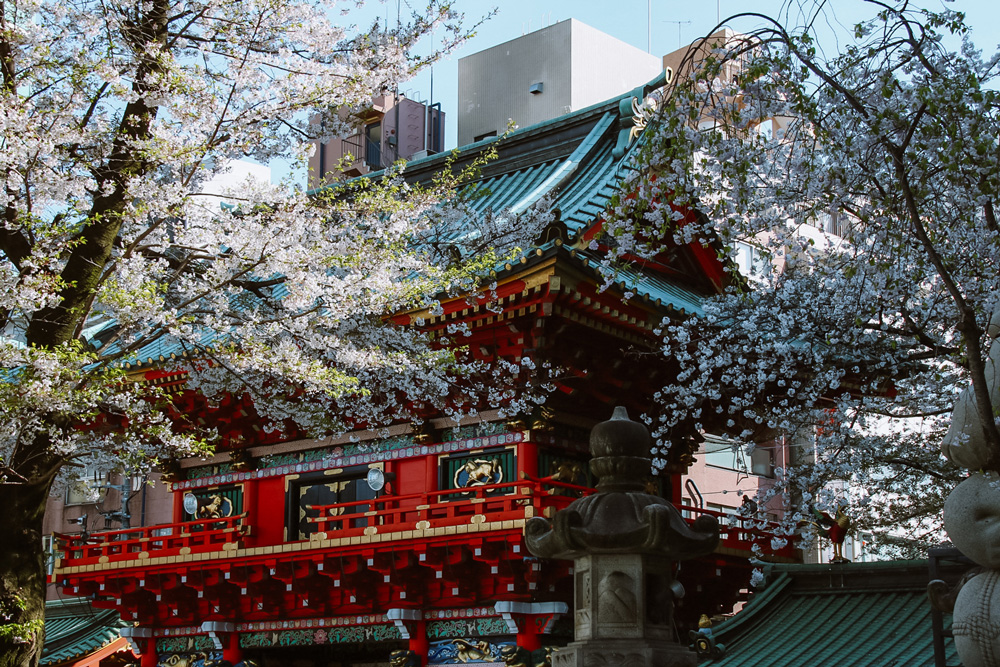
Go to Kanda Myojin Shrine
Before we head to Akihabara, I recommend stopping at Kanda Myojin Shrine. This is one of the most important Shinto shrines in Tokyo, with nearly 1,300 years of history. It moved to its current location in 1616 and even survived the bombing during WWII. The shrine also hosts one of Tokyo’s three biggest Shinto Festivals, Kanda Matsuri, which happens in May in odd-numbered years.
Many people visit to pray for business success, wealth, and prosperity. Students also come here to pray before their university entrance exams. On one of the many walking tours I’ve taken through Tokyo, our guide told us she herself had visited her before her own exam years ago.
The shrine is beautifully decorated. It’s especially lovely when visiting during cherry blossom season as there are some blossom trees on the premises.
When visiting Shinto Shrines, make sure to not walk directly in the middle of the torii gate. This path is reserved for the Shinto Gods.
Shop and Play in the Arcades in Akihabara
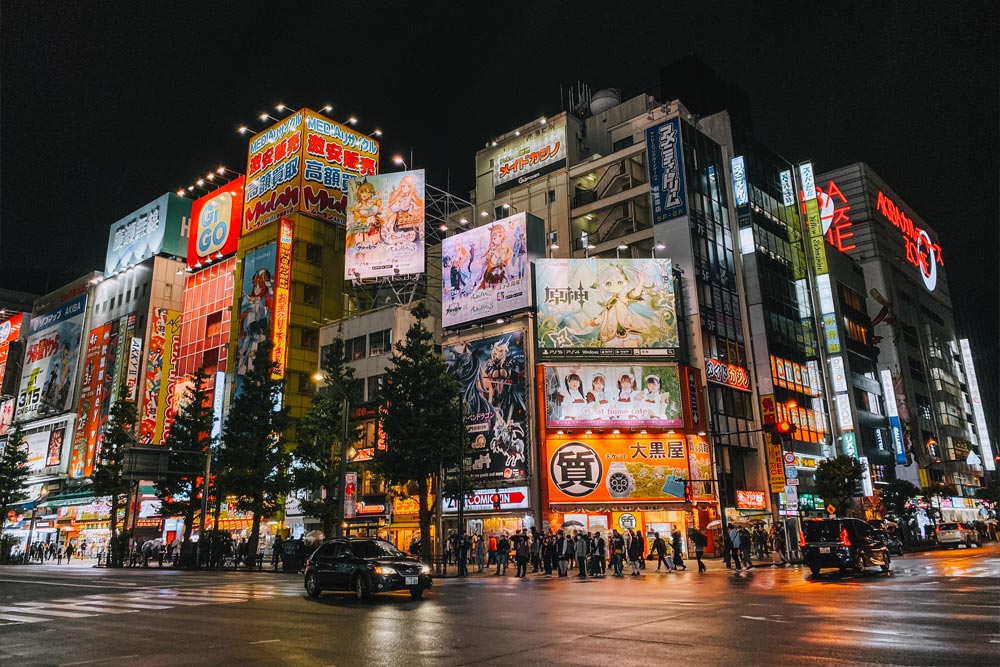
The Akihabara area is also known as Electric Town. Back in the day, it was the first place in Tokyo where people could buy home appliances. It’s also the home base for many video game and anime companies.
Akihabara is the place for all things Otaku Culture. Video games, anime, manga, you name it. The area is filled with shops selling anime figures, Gundam, manga, plushies, and (retro) video games and more. On top of that, you can find lots of gatchapon stores and arcades here.
The arcades are great fun to play in, but make sure you make it past the first floor of the arcades which are often filled with claw machines. Don’t get me wrong, I love the claw machines and I’ve spent my fair share of 100 yen coins to win some Pokémon plushies. But there are so many great arcade games to enjoy if you make it to the floors above.
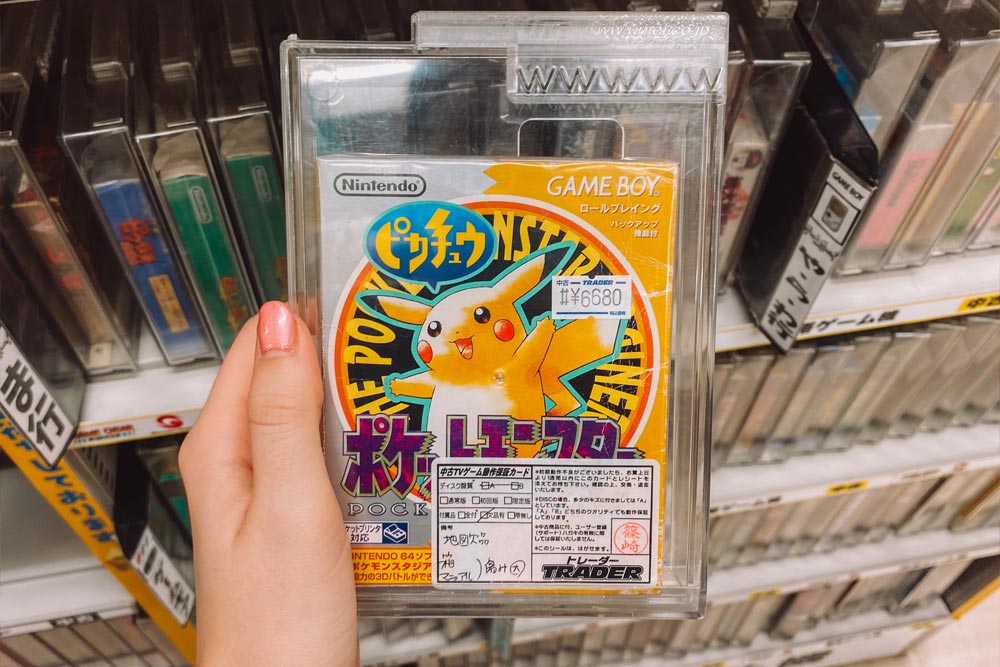
If you’re looking to buy some retro video games in Japan, Akihabara can be a good spot to start your search. There’s a large selection of retro video game stores here, including Retro Game Camp, BEEP, Traders, Book Off and Super Potato.
Retro games in Akihabara have been getting quite overpriced in recent years. If you’re short on time and don’t mind paying a bit extra, it can still be a great place to browse. However, if you’re after cheaper games, it’s better to check different Book Off or Surugaya Specialty Store stores in other parts of the city (or even better, other cities further away from the capital).
Not far from the station, you can buy a Magicarp-shaped taiyaki. Taiyaki is a traditional Japanese sweet treat – it’s a small cake filled with either custard or sweet red bean, normally shaped like a fish. This shop sells them shaped like the fish Pokémon Magicarp.
There is a large Don Quijote in Akihabara too, which is a great shop to check out when you’re in Tokyo for the first time. You can find some cheap and quirky souvenirs here to take home for friends and family.
If Otaku culture isn’t really your thing, you can visit Ginza after the Imperial Palace instead. Ginza isn’t too far from the Imperial Palace and is an upmarket shopping and entertainment district. Alongside the more expensive brands, you can also find the Uniqlo and Muji flagship stores here. The Kabukiza Theatre is also located in Ginza, you can buy tickets on the day for parts of the show.
Day 5 – Minato, Roppongi & Akasaka
This is our last full day in Tokyo, as we’ll be taking a day trip on the sixth day. To make the most of it, we’ll visit some new areas, including Minato, Roppongi and Akasaka.
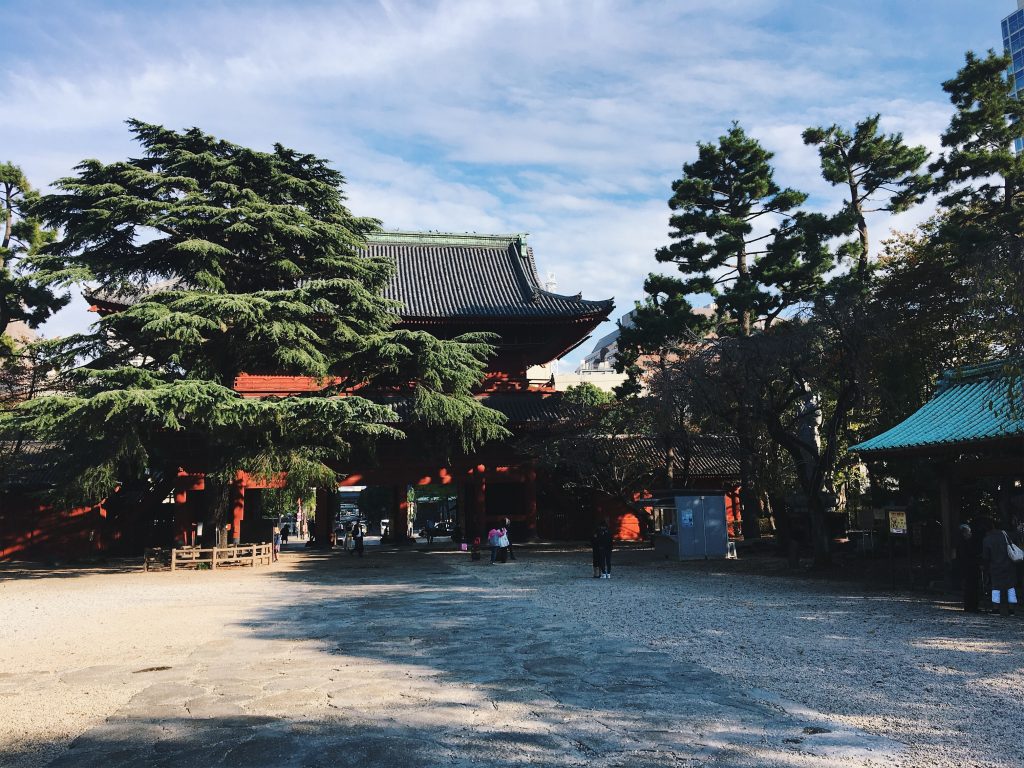
Visit Zojoji Temple
There are enough temples to choose from in Tokyo, but when you’re in this area, Zojoji Temple is a must. Not only does it look absolutely beautiful, especially with Tokyo Tower in the background, but it carries significant historical value. Here, you can find the tombs of six Tokugawa shoguns.
In the gardens of the temple, there are rows of jizo statues. These are there to protect children and travellers.
If you’ve ever watched the 90s anime Sailor Moon, you may already be somewhat familiar with this area of Tokyo. The main characters of the show attend school in the Minato district of Tokyo, and some of the iconic landmarks are seen back in the anime.
Recently, five Sailor Moon manhole covers were installed in the Minato area. So if you’re a fan and want to go around hunting them down, don’t miss out!
See Tokyo Tower
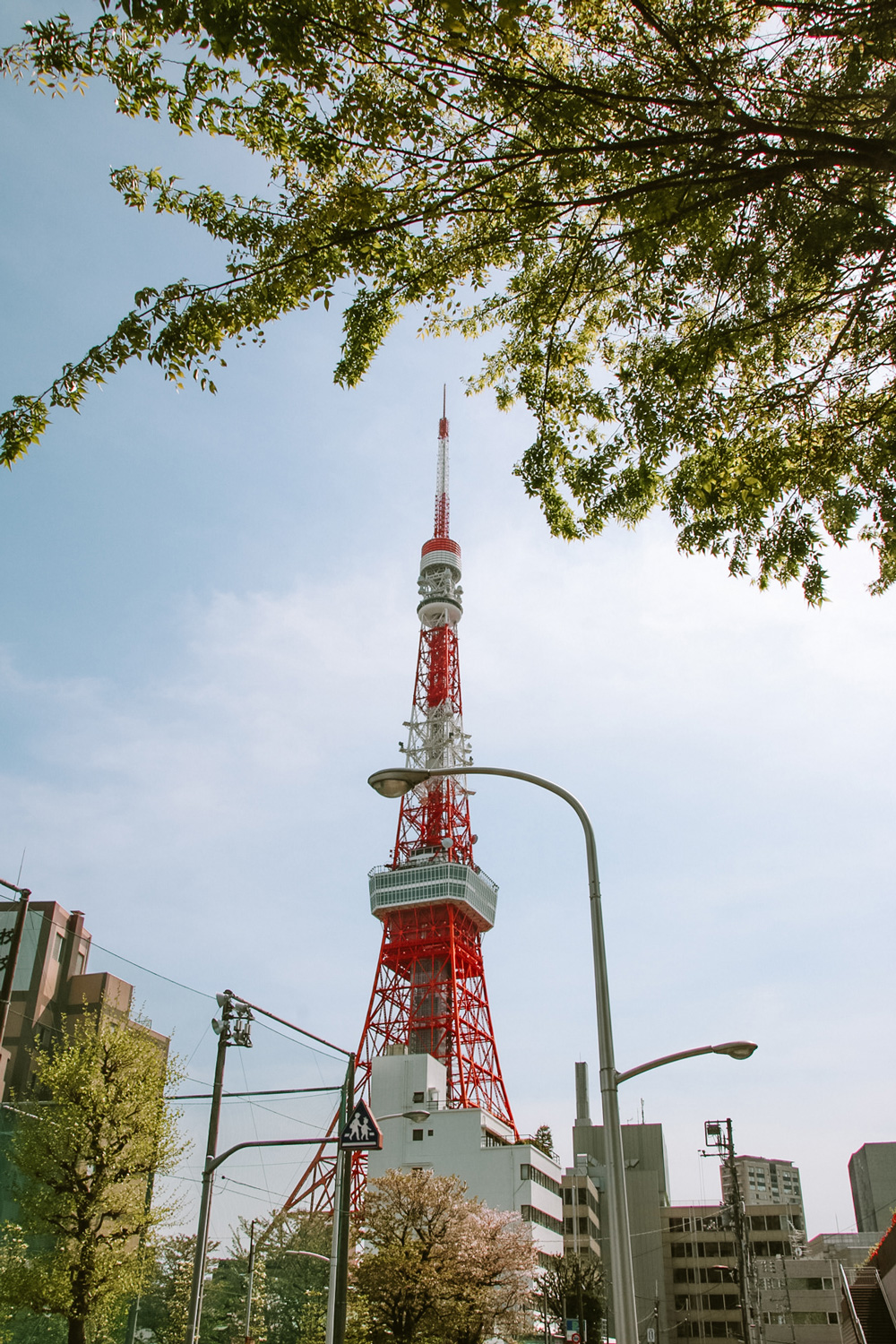
Afterwards, head towards Tokyo Tower. This iconic piece of Tokyo stands 333 meters tall, making it the second tallest structure in Japan. Despite being modelled after the Eifel Tower, Tokyo Tower is 13 meters taller!
You can visit the main deck at 150 meters for a small fee. This can be reached with an elevator or the stairs – both are paid. You can go even higher to the top deck at 250 meters. It is, in my opinion, a little pricey though.
Especially since we’ve already visited Shibuya Sky and the Shinjuku Government Building during this itinerary, I don’t think it’s necessary to go up Tokyo Tower. On top of that, if you’re on top of Tokyo Tower, you won’t be able to enjoy Tokyo Tower as part of the skyline.
Visit Roppongi
Roppongi is one of the high-class districts of Tokyo. With a vibrant nightlife scene and some of the best art museums in the city, it’s a great spot to add to your itinerary. The name of this Tokyo ward literally translates to “six trees”.
Three of the best art museums in Tokyo are located within walking distance of each other in the Roppongi Art Triangle. They include the Mori Art Museum, the National Art Museum and the Suntory Museum of Art.
The open-air observation deck on the Mori Tower allows you to see Tokyo from above (with the iconic Tokyo Tower right in the middle). Go all the way to the top of the Mori Tower to find the “Tokyo City View”, which sits at 250 meters in height.
Walk Through Hie Shrine’s Torii Gates
North of Roppongi, you’ll find Akasaka. This is where we’ll spend our evening. But before that, stop by Hie Shrine.
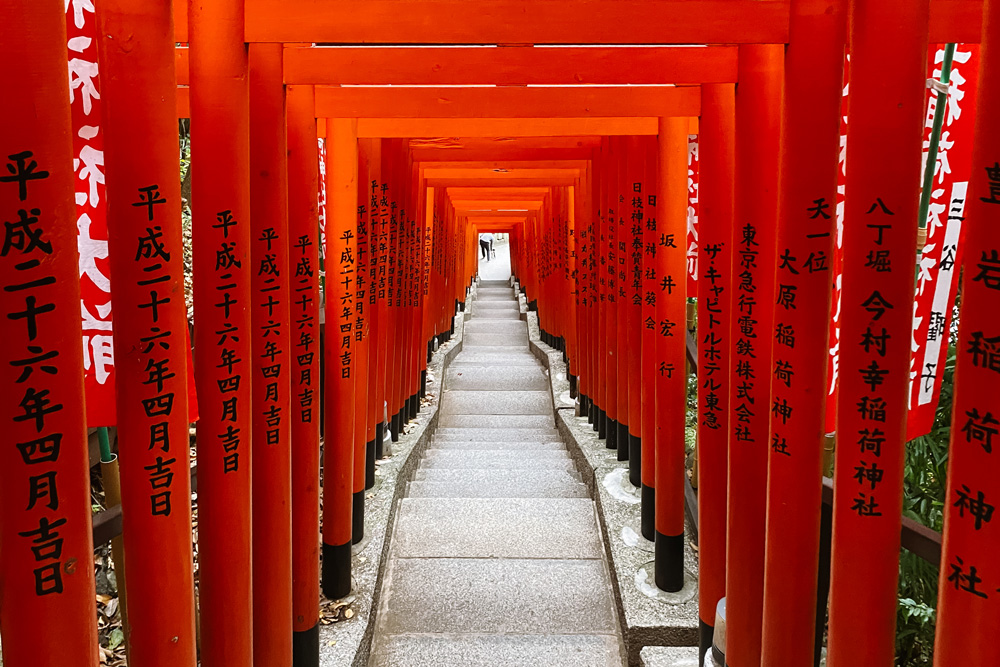
While it’s not quite the same as the thousands of red torii gates at Fushimi Inari Taisha in Kyoto, it does have a very similar feel to it. Hie Shrine has 90 red torii gates lined up towards the top of the hill on which the main shrine is located.
Akasaka turns into a lively neighbourhood at night, with lots of restaurants and bars to choose from. So you can stick around for some dinner and a couple of drinks before heading back to your hotel.
Day 6 – Day Trip from Tokyo
Tokyo is fantastic, but there are some great day trip options from Tokyo that make for a perfect ending to your six days in Tokyo. I’ve added some of my favourite day trips below, so you can pick one that fits your interests:
Mount Fuji
Mount Fuji isn’t too far from Tokyo, making it a great day trip to add to your time here. Japan’s most famous and iconic volcano is often pictured when portraying the country and if you can find a clear day during your time in Tokyo, it’s 100% worth making the trip out.
To get the best views of Mount Fuji, you’ll want to make your way to Kawaguchiko Station. There are multiple ways to get here, including:
- Bus: Cheapest option, takes around 2 hours each way.
- Train: You have the option to use the express or local train. The express train is a bit more expensive but will get you there quicker.
Staying overnight near Lake Kawachugi is a great idea to have more time to explore the area, especially because taking the bus here can take a few hours.
However, if you only have one day, I recommend booking a guided tour with a travel company. They will drive you to all the good viewing spots, so you don’t have to worry about taking multiple local trains to get there yourself. Alternatively, you can book a private driver to take you to the best spots, but this is a more costly option.

Because Mount Fuji likes to hide in the clouds, it’s worth checking the visibility forecast before making the trip out. It would be a shame to travel there and not see anything but clouds.
Hakone
Because of its beautiful scenery, Hakone is a popular day trip destination from Tokyo. It’s a little getaway from the busy city and a great spot to try the Japanese hot spring baths (onsen). From Tokyo, it takes around 1–1.5 hours to get to Hakone.
Here are a few things you should check out when in Hakone:
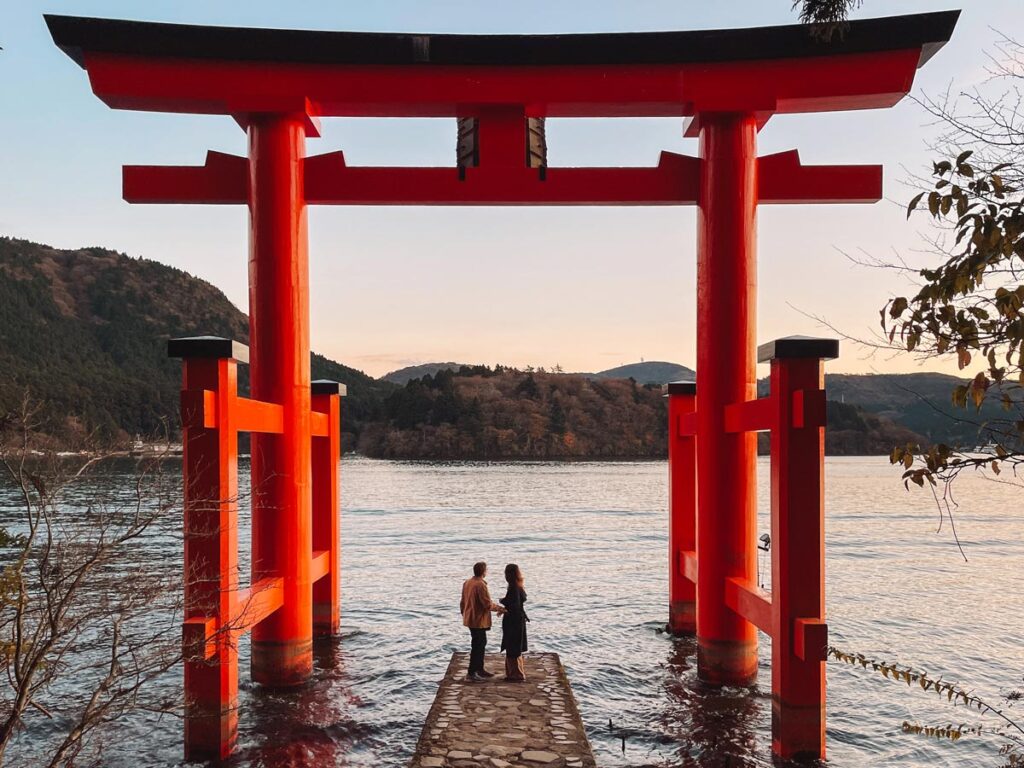
- Hakone Shrine: Possibly the most famous attraction in Hakone is Hakone Shrine (pictured below). This large torii gate stands on the banks of Lake Ashi. Especially after having spent a few days in the busy metropolitan city of Tokyo, taking some time to enjoy the serene atmosphere of this shrine is a perfect way to unwind.
- Visit an onsen: Known for its many onsens, Hakone is the place to visit one yourself. These hot springs are very popular in Japan – by both tourists and locals alike – and make for a unique experience. Keep in mind that you’ll have to enter naked in most onsen, and genders are separated.
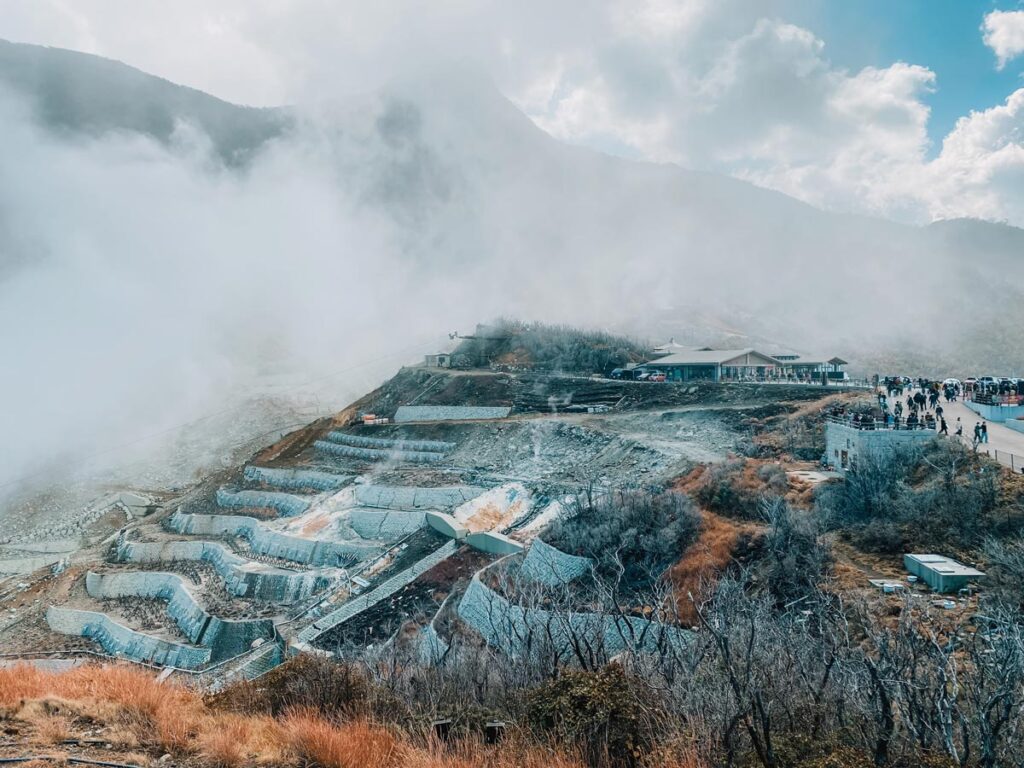
- Owakudani (Boiling Valley): Following the Hakone Loop, you can take a ropeway up to see the remains of an erupted volcano. Even though it’s been over 3,000 years since this volcano erupted, the smoke is still coming out of the Earth. Once you get up here, you can try the famous Black Eggs (Kuro Tamago), which has been cooked in naturally boiling water. Legend says eating one will prolong your life by 7 years (worth a shot, right?).
For a more in-depth route, you can check out my one day Hakone itinerary guide. It includes more information about all the sights, how to get to Hakone and how to efficiently make your way around when spending one day here.
Disneyland Tokyo or DisneySea
Tokyo has not one, but two Disney parks! Disneyland Tokyo and DisneySea.
Both parks are a great visit if you like theme parks and/or Disney, but since DisneySea is the only one of its kind in the world, my preference is to go there. Obviously, there are many reasons to pick one over the other, and it’s a very personal choice.
Since you cannot buy tickets for either park at the gate, you HAVE to pre-book them. You can either do this online on sites like Klook or buy them in Japan at convenience stores.
Other Tokyo Day Trips
There are so many great day trip options from Tokyo, but I won’t bore you with more information on them. Instead, I’ll link some of my favourite day trip itineraries from Tokyo below, so you can check them out:
- Kamakura day trip: A lovely seaside town around one hour from Tokyo.
- Kawagoe day trip: A historic side of Tokyo, around 30 minutes from the city centre. Goes by the nickname “Little Edo”.
- Yokohama day trip: Japan’s second-largest city is only 30–45 minutes from Tokyo, home to one of the largest Chinatowns in the country.
- Nikko day trip: A bit further from Tokyo (2–3 hours), Nikko is a lovely town located in the Tochigi mountains. If nature and history are your thing, it’s definitely one to consider.
Where to Stay in Tokyo
Since Tokyo is one of the biggest cities on the planet, it may be a little overwhelming to decide where to stay. Since this itinerary includes five days of exploring Tokyo plus a day trip from Tokyo, you can stay in the same hotel for the full six days.
I have a fully dedicated guide on where to stay in Tokyo, but if you don’t have time to read it, I’ll share my favourite picks below.
How to get to Tokyo from the Airport
Tokyo has two airports, Narita and Haneda. Either airports have relatively easy access to the city centre, even though Haneda is located much closer to the centre.
Depending on which airport you arrive and where you’re going in Tokyo, there are multiple options on how to get there. Google Maps is your friend here, especially when using public transport!
How to get to Tokyo from Haneda Airport?
Haneda Airport is located around 15 kilometres from the city centre, making it very easy to get to Tokyo.
- Limousine Bus: You can also take the limousine bus (which is essentially a coach) from Haneda Airport, which stops at major hotels and train stations. You can easily store your luggage and it’s a very affordable way to get to the city without any hassle. It’ll take between 30–60 minutes depending on your destination, but prices are the same no matter where you go. Pre-book your tickets here.
- Metro: From Haneda Airport, you can get on the Keikyu Line to Shinagawa Station. From there, you can transfer to the JR Yamanote Line, which loops around the city and stops at popular areas like Shibuya, Shinjuku and Ueno. It’ll only cost you a few hundred yen and is relatively quick (around 15 minutes to Shinagawa Station, then an extra 10-20 depending on your final destination).
- Taxi: As you’d expect at an airport, taxis will be readily available. However, they can get very expensive (you can expect to pay between $40 – $70+).
How to get to Tokyo from Narita Airport?
Narita Airport sits a bit further from the city centre, at around 80 kilometres. However, it’s still quite easy to make your way to Tokyo – I’ve done it multiple times without any issues.
Many people say you should fly to Haneda if you can, but I honestly think you should focus more on what flights work for your budget- and time-wise, rather than what airport they land at. The only issue occurs when arriving at Narita late at night, as public transport won’t be an option anymore.
If you land at Narita, there are multiple ways to get to your hotel in Tokyo, including:
- Narita Express (train): This train can get you from Narita Airport straight to Tokyo, Shibuya and Shinjuku Station. It’ll cost around 3,000 yen per person (depending on the destination) and will take around 1–1.5 hours.
- Keisei Line (train): This is a commuter line, which will take longer compared to the Narita Express. However, it’s also a cheaper option. Since it’s a commuter line, it’s best to avoid it during rush hour if you’re carrying suitcases due to limited space.
- Keisei Skyliner (train): This is the fastest way to get to the city from Narita Airport, getting you to Nippori in just over half an hour and to Ueno Station in around 40 minutes.
- Limousine Bus: This coach will take you to some of the major hotels and train stations in the city. You can easily store your luggage for the journey, and it’s relatively affordable. Make sure you pre-book your tickets beforehand though.
- Taxi: Similarly to Haneda Airport, there will be more than enough taxis available, but you can expect to pay high prices for these. Especially since Narita is further from the city than Haneda, it’ll be even more expensive. A taxi ride will take around 90 minutes and will cost you $200+.
How to use Public Transport in Tokyo
Since this six-day Tokyo itinerary takes you to multiple different areas in the city, you’ll have to use public transport to get around. Luckily, it’s very easy to navigate, even if you don’t speak Japanese.
The easiest thing to do is to get a Suica or Pasmo card. These are IC travel cards that you can load up with money. You simply tap in and out at the stations, and it will automatically take the correct change from the card. This saves you from having to buy individual tickets every time you use the metro, it’s so much easier.
Because of the current chip shortage, it’s not always possible to buy them at the airport, so you can also add it to your Apple Wallet if you use an iPhone. You can then top it up through your Apple Wallet too, which is very convenient.
Once you’ve got your Suica or Pasmo card ready, you’ll be able to use the metro without any issues. The easiest way to get directions is by using Google Maps. Multiple navigation apps work well in Japan, but I always use Google Maps and never have any issues.
Once you put in your destination, Google Maps will show you what metro/train station to use, what line you want to go to and in how many minutes your train will arrive. And luckily, since you’re in Tokyo, it won’t matter if you miss the metro – there will be another one in a few minutes.
6 Days in Tokyo – Conclusion
Six days in Tokyo may not be enough to see everything (I’ve spent weeks in Tokyo and there’s still so much left to explore), but it’s definitely enough to get a good idea of what this incredible city has got to offer.
As I keep returning to Tokyo, I’ll be sure to keep updating this guide with any new places I find and think are worth visiting on your first trip. As always, if you have any questions, feel free to comment them below.
Happy travelling!