Planning to visit the Kansai region in Japan? With the Kansai Wide Pass, you can explore the region while saving money. This one week Kansai itinerary shows you how!
The region around Kyoto and Osaka has a lot more to offer! Kansai is known for its delicious food, hospitality and rich history. And with the Kansai Wide Pass, you can take unlimited train journeys through the region!
As Osaka is a popular airport to fly to when visiting Japan, you may want to spend some time in Kansai before heading elsewhere. Since I’ve travelled through Kansai quite a few times, I thought it’d be time to put together a Kansai itinerary for first-time visitors.
What is the Kansai Wide Pass?
The Kansai Wide Pass is a travel pass for foreign tourists visiting Japan. It’s offered by JR West and lets you take unlimited journeys on the JR lines in the Kansai Region (and a little further!) for five consecutive days.
If you’re planning to travel through this region a lot, it can be a big money saver. Not only that, but having the pass gives you some extra flexibility, which can ease a bit of travel stress. As you can take unlimited journeys on the JR Lines, you don’t have to rush or wait for a specific train if you make any changes to your itinerary.
Whether it’s worth the money or not depends on your itinerary. So before purchasing the pass, make sure to use the JR Pass Calculator to see how much your regular train tickets would cost first.
Other Kansai Passes
There are other similar passes available in the Kansai Region. In this guide, I’ll focus specifically on the Kansai Wide Pass, as it works perfectly for the itinerary I’ve put together. Other passes are a bit more expensive but cover more ground.
If you want to add Hiroshima to your Kansai itinerary, you could consider the Kansai Hiroshima Area Pass. This pass also includes the Okayama area. Similarly to the Kansai Wide Pass, this pass can be used for five consecutive days but costs a bit more.
Alternatively, the nationwide JR Pass covers all these areas. However, since the price increase in October 2023, getting the regular JR Pass may not be the best idea unless you are planning to travel on the Shinkansen for longer distances. If you’re only visiting the Kansai area, sticking to a regional pass is a much better and cheaper way to see Japan.
7 Day Kansai Itinerary Overview
Here is a quick overview of my one-week Kansai itinerary. I’ve put this together for first-time visitors who want to make the most of their Kansai Wide Pass. It includes the following areas:
- Kyoto
- Osaka
- Himeji
- Kurashiki
- Nara
- Kinosaki Onsen
I recommend basing yourself in Kyoto and taking day trips from there. This way, you don’t have to drag your luggage from city to city. Only on the last day, I recommend staying one night in Kinosaki Onsen. This is because this beautiful onsen town has so much to offer, and it’s best at night.
Check out my Kyoto accommodation guide for my favourite areas and hotels in the city.
Day 1 Kyoto
We start our week in Kansai in Kyoto. For this itinerary, it’s best to base yourself in Kyoto for the first five days, before we move over to Kinosaki Onsen for the last night. The first two days, we’ll spend exploring Kyoto, and afterwards, we’ll take day trips from Kyoto with the Kansai Wide Pass.

IMPORTANT: DO NOT ACTIVATE YOUR KANSAI WIDE PASS YET. Since the pass is only valid for five consecutive days, you don’t want to use it just yet. There is quite a lot to see in Kyoto, so we’ll spend the first two days exploring here. Once you start using the JR Lines to get to different cities, we’ll use the Kansai Wide Pass (from day 3).
On the first day exploring Kyoto, I recommend checking out the following sights:
- Fushimi Inari Taisha: Start your day early by visiting one of Kyoto’s most famous shrines before the crowds. As it’s a popular sight, you’ll want to get here no later than 7-8AM. This beautiful shrine is known for its thousands of red torii gates lined up guiding you to the top of Mount Inari. Even if you arrive when the big crowds are at the shrine, just hike up a bit further – most people don’t make it up too far! You’ll want to spend at least a few hours here.
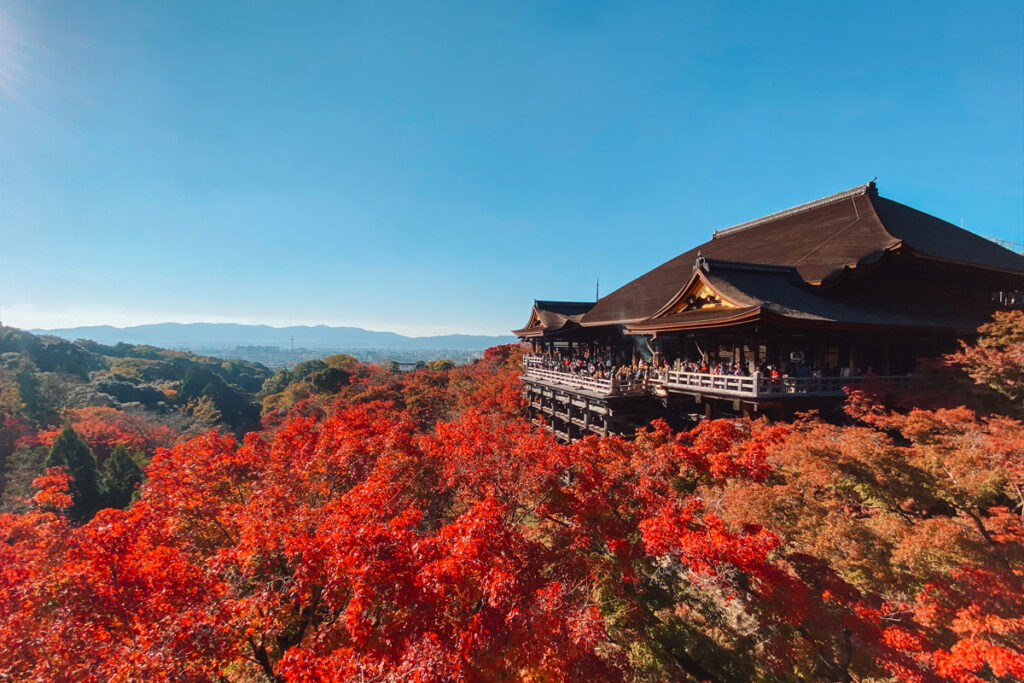
- Walk through Higashiyama District: In the afternoon, you can visit one of Kyoto’s geisha districts, Higashiyama. The small wooden teahouses, shops and restaurants can be found in between temples and well-preserved streets. It’s like stepping back in time. Make sure to stop by some of the main sights, including Kiyomizu-Dera, Yasaka Pagoda and Kodaiji Temple.
- Pontocho Alley: End your day by grabbing some food in one of Kyoto’s prettiest alleyways, Pontocho Alley. It can get pretty busy here, so you may just want to walk through it to soak up the atmosphere and grab dinner someplace nearby.
Day 2 Kyoto
There is so much to see and do in Kyoto, that it’s tricky to narrow it down to just two days. But, there is more to see in Kansai than just Kyoto! On our second day in Kansai, we spend another day in Kyoto, seeing some more of the famous sights, including:
- Arashiyama Bamboo Grove: Arashiyama is a district in West Kyoto, known for its beautiful bamboo grove. The area itself is very traditional, with lots of little shops and restaurants. Try to get here early, because the bamboo grove is another popular tourist spot. There are some less busy bamboo groves around the area too, so you may want to go have a wander around.
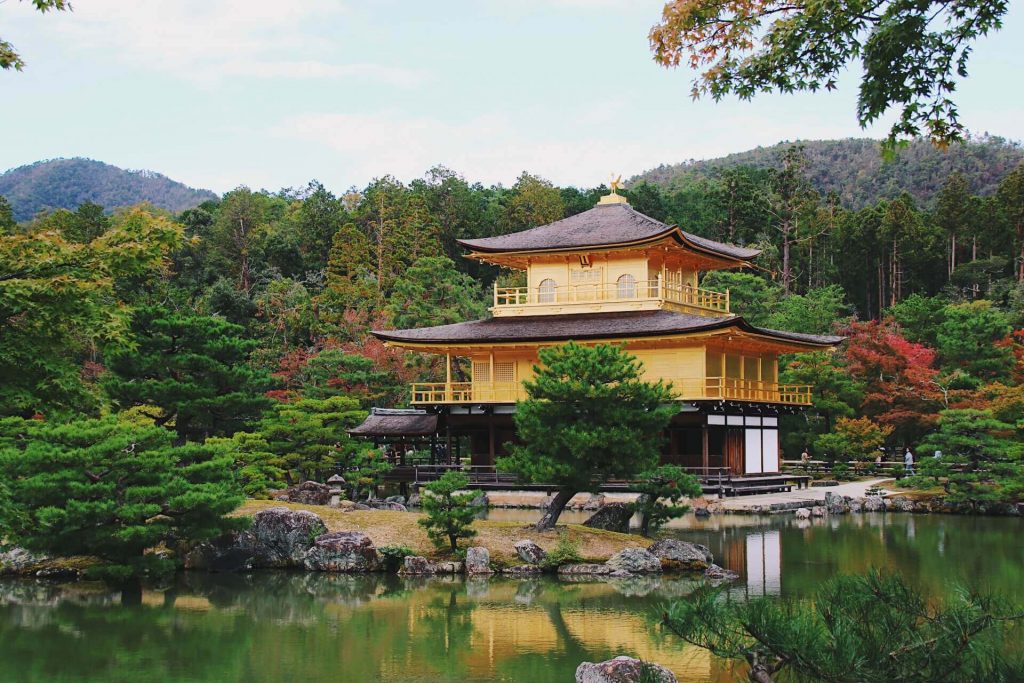
- Kinkaku-ji Temple: Also known as the Golden Pavillion, Kinkaku-ji is one of Kyoto’s UNESCO World Heritage Sites. Surrounded by beautiful Japanese gardens, it makes for a lovely visit.
- Kyoto Imperial Palace: Kyoto used to be the capital of Japan, before the Emperor moved to Tokyo. You can still visit the former Imperial Palace in Kyoto however.
I’ve got a more in-depth two-day Kyoto itinerary that follows the same route and sights but includes a walking route and more information.
Day 3 Osaka
Today you want to activate your Kansai Wide Pass. The pass can be used over five consecutive days, so we want to make sure the most expensive journeys in Kansai are covered. Starting today, we’ll be taking trips out of Kyoto, so we can start using the pass.
It only takes about 30 minutes to get to Osaka from Kyoto, making it a perfect day trip itinerary. It’s a popular city to visit along the Golden Route. The friendly atmosphere makes it one of my favourite places in Japan, and one I happily come back to almost every time I visit Japan.
Here are some of the best things to do in Osaka during your day here:
- Osaka Castle: One of Japan’s most famous landmarks, Osaka Castle, played a big role in unifying the country in the 16th century. Inside, you can find a museum – which I didn’t think was quite worth visiting, but the view at the top is lovely. The gardens outside the castle are free to visit, and are beautiful!
- Shinsekai: This popular district was developed at the start of the 1900s. On the main street, you can find some of the best street food stands, bars and more. Tsutenkaku Tower stands in the middle and offers great views of the city.
- Namba Shrine: Namba Shrine is home to a 12-meter tall lion-head-shaped building. It’s said to swallow up any evil spirits and bring success in business and school. Since it closes at 5PM, make sure to visit early enough!
- Dotonbori: This area in Osaka is probably the city’s most famous. Neon lights, shops, street food and music – Dotonbori is THE place to be in Osaka at night. Apart from tons of amazing food, you can also see the iconic Glico Man sign here and the big Moving Crab that hangs above one of the shops.
I have a full one day Osaka itinerary with more detailed information about the sights and a free walking route.

Day 4 Himeji & Kurashiki (Okayama)
On the fourth day in Kansai, you can take a trip West to visit Himeji and Kurashiki in Okayama. Both are perfect for a half-day of exploring and since we want to make the most of the Kansai Wide Pass, we’ll visit both.
From Kyoto, make your way to Himeji with the Kansai Wide Pass. This will take approximately 1.5 hours. As we want to visit Himeji and Kurashiki on the same day, you want to start early. Try to get to Himeji no later than 9:30AM!
Himeji Castle, the main sight in Himeji, is said to be the most beautiful castle in the whole of Japan. The grey-white colours gave it the nickname White Heron Castle. It’s also a popular spot for cherry blossom viewing if you happen to catch them in late March and early April.
Here are the best things to do in Himeji:
- Himeji Castle: The main reason for visiting Himeji is its castle. Despite it dating back to 1333, this castle has never completely been burned down or destroyed. It’s one of the 12 remaining original castles in the country. There are guided tours available in English at the castle (at 10AM and 1PM), but you can also choose to explore it by yourself. Allow around two hours for visiting.
- Himeyama Park: The park next to Himeji Castle is also worth visiting. Inside, you can find small shrines, a pond and the castle moat.
- Kōko-en Garden: You can buy a combination ticket for Kōko-en Garden and Himeji Castle. It includes nine different Japanese-style gardens, connected by gates and water streams. Especially during cherry blossom season or autumn, these gardens are a must-visit.
The one day Himeji itinerary on our site comes with a handy walking route and more information about what to see and how to get there.

After a few hours in Himeji, you want to get back on the train and head towards Kurashiki. This should take around 40-50 minutes, with a quick stopover in Okayama. Here are the best things to do in your afternoon in Kurashiki:
- Kurashiki Bikan Historical Quarter: Kurashiki used to be a thriving distribution hub in the Edo Period. This part of the city has been beautifully preserved. The traditional buildings along the canal house restaurants or shops nowadays. It’s a real treat to walk around!
- Take a boat tour on Kurashiki’s Canal: You can take a boat tour on the canal in the historical quarter. Buy your tickets at the tourism information centre.
- Kurashiki Denim Street: Not far from Kurashiki is the birthplace of Japanese denim. In the historical quarter, you can find a small street dedicated to this. You can buy denim here but also try blue ice cream.
- Visit Achi Shrine: Walk up the Tsuragatayama Hill to find Achi Shrine. You can also enjoy some beautiful views of Kurashiki from up here.
At the end of the day, you can use the Kansai Wide Pass to make your way back to Kyoto from Kurashiki. This should only take around 1.5 hours.
Day 5 Nara
Nara is a popular day trip destination from both Kyoto and Osaka. Known for its hundreds of deer roaming freely around the park and parts of the city, Nara is a lovely town to add to your Kansai itinerary.
Nara holds a lot of history. It was the very first capital of Japan and is home to eight UNESCO World Heritage Sites. When you’re going on a day trip here, make sure you get to Nara before 10 AM – that way, you’ll have enough time to see all the main sights without having to rush.
From Kyoto, you can use the JR Nara Line Local or the JR Nara Line Rapid Service. This journey is covered under the Kansai Wide Pass. It should take between 40 and 70 minutes.
Here are some of the best things to do in Nara on your day trip:
- Nara deer park: Nara’s famous deer walk around this park freely. These wild deer have grown used to the visitors and even beg for the deer crackers sold all across the park. They look very cute, but beware! They can get a little aggressive! Nevertheless, they are beautiful to look at – some even bow back if you bow to them.
- Todai-ji Temple: One of Nara’s UNESCO World Heritage Sites, Todai-ji Temple is the largest wooden structure in the world. Inside, you can find the world’s largest Daibutsu-san, or Bronze Buddha Statue. A must-visit when in Nara for sure.
- Kasuga-Taisha: Nara is home to quite a few temples, but Kasuga-Taisha should not be missed. Not only does it line up perfectly with the walking route in my one day Nara itinerary, but it’s also one of the most beautiful in the city. At the shrine, you can find 3,000 stone lanterns lining up the path towards the entrance – it’s stunning!
- Isuien Garden: A perfect example of a Japanese zen garden. There are several teahouses inside too.
For more information, you can check out my full one day Nara itinerary. It includes detailed information on all the sights, including a walking route.


Day 6 Kinosaki Onsen
Hot springs (onsen) are a big part of Japanese culture, and visiting one is high on most people’s Japan bucket list. Kinosaki Onsen is one of my favourite hot spring towns and can be reached in around 2.5 hours from Kyoto by train. And even better, the journey is covered by the Kansai Wide Pass!
As you’ll be staying overnight in Kinosaki Onsen, I recommend leaving your larger luggage in storage at Kyoto Station and bringing just an overnight bag (or backpack). This will allow you to wander around the town before checking into your Ryokan later that day.
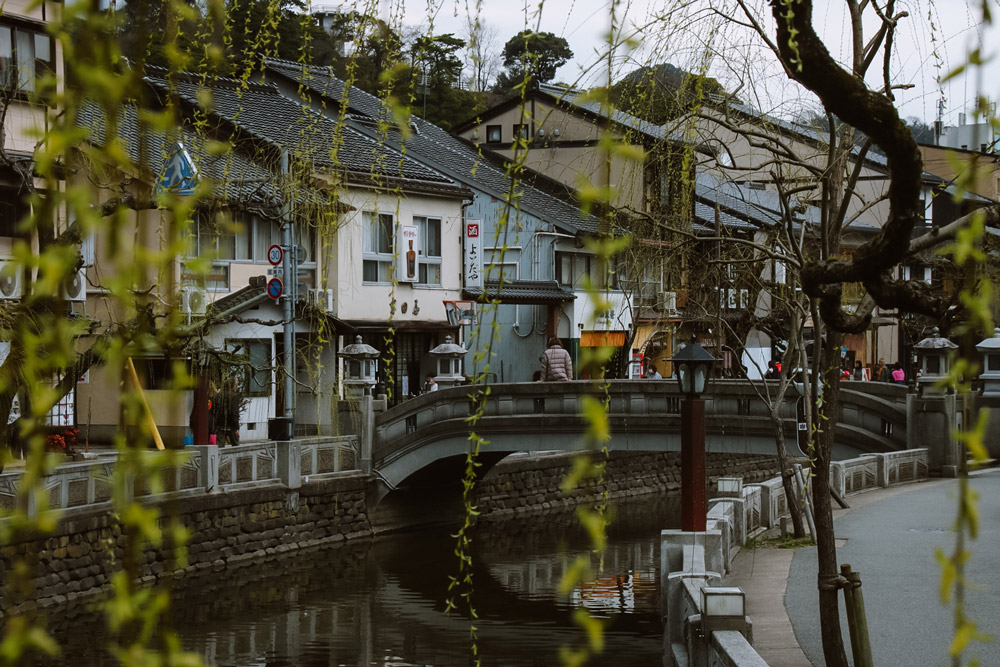
What makes Kinosaki Onsen so special is that the town works together as “one big Ryokan”. There are seven public bathhouses in the town, which you can enter for free if you stay in any of the 70+ ryokans overnight. All public bathhouses are also tattoo-friendly, which isn’t very common in Japan.
In the evening, people take to the streets wearing their yukata and wooden geta shoes and go “onsen hopping”. This means they go from one onsen to the next, and you can take part in this! It’s magical!
Here are some other things to do when in Kinosaki Onsen:
- Visit Onsenji Temple: Halfway up the hill at the end of Kinosaki Onsen, you can find the town’s main temple. As people used to believe the healing hot spring waters were a gift of the Gods, they would hike up the mountain to thank the Gods at this temple.
- Enjoy the view at Miharashi Terrace Cafe: You can hike up further (or take the ropeway) to reach the top of the hill, where you can find a lovely cafe with a beautiful view.
- Enjoy Tajima Beef or Snow Crab during a Kaiseki Dinner: When staying in one of the 70+ Ryokans in Kinosaki Onsen, you’ll probably be treated to a delicious traditional kaiseki dinner. This type of dinner consists of multiple courses and small dishes, often made with the best local and seasonal ingredients.
- Join a zen meditation or straw craft workshop: The Kinosaki Onsen tourism board offers special meditation and straw craft activities that you can pre-book before your stay. They’re a great way to interact with the locals and learn more about what makes Kinosaki Onsen so special. I had the pleasure of joining both and enjoyed them thoroughly!
My in-depth Kinosaki Onsen guide includes a lot more information about the town, its history and all the best things to do here.
Day 7 Kinosaki Onsen
After staying overnight in Kinosaki Onsen, you can use your onsen pass until 3PM. This means you can spend a few more hours enjoying the public onsen in the town before heading back to Kyoto.
How Much Money Will I Save With the Kansai Wide Pass?
Rail passes can be a great money saver in Japan, but only if you’ve done your research. If and how much money you’ll save depends entirely on your itinerary.
If you’re following the itinerary I outlined above, and use the Kansai Wide Pass from day 3 until day 7, you’ll save yourself 7,000 yen.

Conclusion – One Week Kansai Itinerary With the Kansai Wide Pass
That concludes my one week Kansai itinerary for first-time visitors. Don’t forget that you can use the Kansai Wide Pass to visit even more places in Kansai, so if you’re visiting for the second (or third) time and want to go outside the main cities, this pass offers a lot of variety!