Sunday race
In this weekly columnAndroid Central Wearables Editor Michael Hicks talks about the world of wearables, apps, and fitness tech related to running and health, in his quest to get faster and fitter.
Apple and Google/Fitbit have jumped on the training load trend in 2024, and it’s about time. I attribute my VO2 Max increase directly to following the training load prompts on my running watches, especially Garmin’s Training Load Focus chart. But no brand does it perfectly, and I’m more than happy to vent about their failings.
Some leave their training load data too vague to understand. Some don't differentiate enough between different guys load. And some give too much weight to their average heart rate when deciding load rather than their varied heart rates throughout a run.
I would love to combine training load elements from Garmin, Coros, Apple and Fitbit into one ideal training tool that better reflects my current training effort.
The training load TL;DR

For people who have no idea what I'm talking about, training load is an arbitrary number calculated by your active minutes multiplied by your heart rate effort level.
A 30-minute run in zone 2 or 3 can earn you 60 training load points (i.e. 30 x 2), while a two-hour steady walk may only earn you 40 points (120 x 0.33). A 15-minute track workout can earn you 150-200 points, depending on your effort.
Different brands calculate load using similar methods, but with their own unique multipliers and heart rate zones. I ran 10K with four watches today and got training load scores of 130, 140, 160, and 220 even though the heart rate and GPS data were nearly identical. As I said, the number is arbitrary.
Why does it matter then? Because they compare your acute load (your total score over a week of training) to your chronic load (four weeks of training) and see how they compare. You always want your recent acute load to be equal to or better than your long-term chronic load. It doesn't matter if your total load is 200 or 1000, it just matters if it's a better number than last week or last month, regardless of whether you're doing well or not. so much higher that you hurt yourself by overtraining.
What Garmin gets right (and what it doesn't) about training load
Like other brands, Garmin tells you whether your acute load is “optimal” for getting fit, with a training load ratio that compares your weekly total and monthly average. What I particularly need, however, is “training load focus.”
Status in training in my Garmin Forerunner 965I can find a chart that divides my four-week load into three categories: Anaerobic, high aerobic leveleither low aerobic level Trainings.
The conventional wisdom about running is that you can't Improve your VO2 Max Run at full speed at all times. You need “conversational pace” workouts in lower heart rate zones to improve base fitness (low aerobic), plus maximum effort sprints where your body can't get oxygen fast enough and burns muscle energy instead (anaerobic).
The Garmin graph screams at me every time I have a low aerobic or anaerobic “lack”, so I strive to vary my training load types, while other Brands may simply encourage you to gain as much weight as possible. It helped me improve my VO2 Max from 46 to 51 in the last year or so.

My only (main) complaint about Garmin's training load approach is that it puts shape Too much value in heart rate averageIf I run three miles in my heart rate zone (HRZ) 2, I usually get a low aerobic load of about 60. Today I ran three miles in zone 2 and three miles in zones 3 and 4; in the end, all of that load went directly to high aerobic exercise.
“Each run is analyzed from start to finish to determine the *major* category it falls into,” the Garmin Forerunner team explained to me. “We split the load within an activity into anaerobic and aerobic, but we won't split it into high aerobic and low aerobic.”
When I asked if they would “consider calculating and dividing the charge based on mileage divisions or other criteria,” I received a rather terse response: “We have considered it.”
His response made me lose my optimism, but in an ideal world, Garmin wanted to Breaking up the training load into smaller increments rather than focusing on the average. That way, I could jog a few miles and then finish with a high-aerobic mile for fun without worrying about that raising the average enough to negate my previous restriction.
I'm also skeptical about how Garmin's aerobic/anaerobic split works, for what it's worth. I ran a half marathon last month where I spent most of the time in zones 3/4, but consistently hit over 90% of my max heart rate for most of the last 30 minutes. No Effect of anaerobic training at the end, only high aerobic.
What Apple, Fitbit and Coros do right (and wrong)

My ideal training load system would take full advantage of Garmin's expertise. I still love their focus on training load and suggested daily workouts that adjust based on whether you need a more anaerobic or less aerobic load. I would just “borrow” a few things from Coros, Apple, and Fitbit/Google.

With me CHOIRS Rhythm 3 or Vertix 2X, I don’t have to worry about averages. Each run breaks down training load into three categories: easy, medium, and hard. So when you look at the four-week intensity distribution graph, you know it’s accurate. You also get more detail with the monthly pace zone distribution graph, which breaks down exact load totals into each heart rate zone.
What stops me from using COROS more often is the lack of guidance. I like how Garmin marks the “optimal” easy/hard training load I should have and adjusts training suggestions accordingly, while COROS lets independent runners figure it out for themselves. I admit I need some extra help.
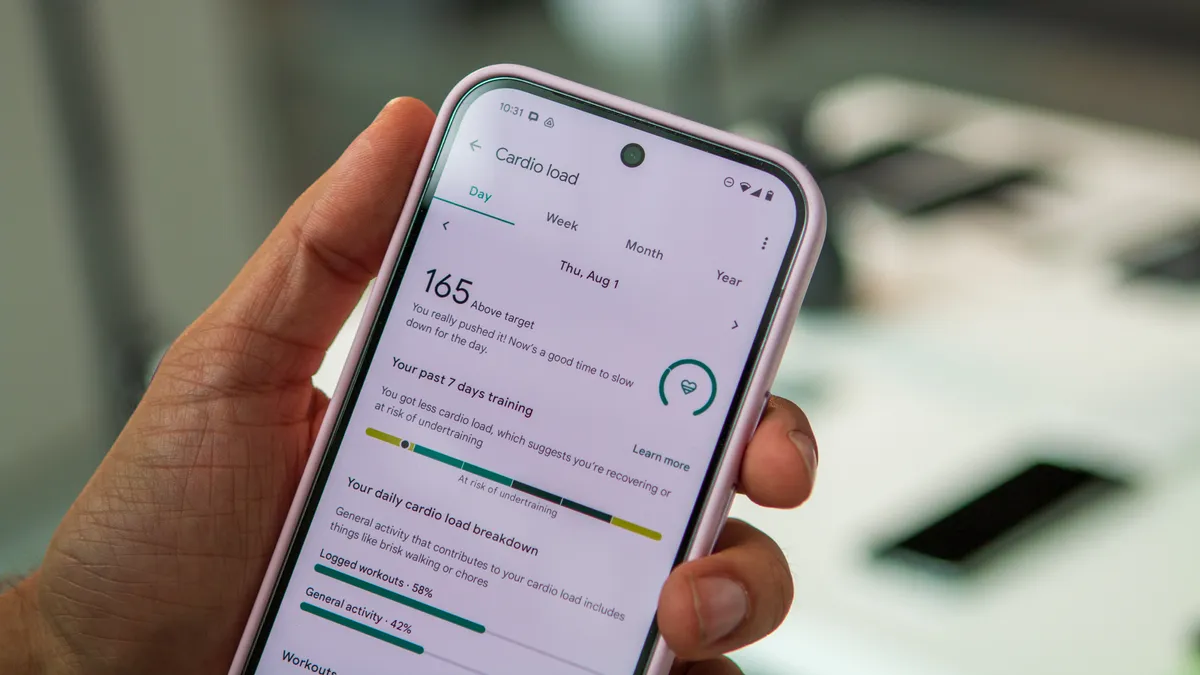
I can't speak to specific details about Fitbit Cardio Loadingthe new system that is added to the Pixel 3 watch and other Fitbits, until I can review the watch. Speaking exclusively On what Google revealed publicly at its Made by Google event, I love that Fitbit calculates the load based on “recorded workouts” and “overall activity.”
Every other fitness watch brand only records training load if you’re “working out.” But Fitbit makes no distinction: you can get training load any time your heart rate goes above the norm, regardless of the activity. Some people may prefer more control over training load, but others will like to be validated for everyday tasks that require sweating or walking their dog for 10 minutes. The little things add up.
As for Apple, I haven't had a chance to try out its new 7-day and 28-day training load charts yet – they look promising and accessible for casual athletes, if a little short compared to the numbers offered by Garmin and Coros.
What I like about Apple is that you can manually change the impact of your training load by rating the intensity of the workout from 1 to 10. I've been doing more walking Recently, Garmin has been leaning towards lowering my training load for hikes because my heart rate is pretty consistent even if my muscles are getting sore from the hills and valleys. I wouldn't mind being able to increase (or decrease) my load numbers when I feel like the auto-generated number isn't perfect.
No fitness watch Everything works perfectly with training load. Each has its strengths and drawbacks. And frankly, I'd rather have an imperfect training load tool than no load at all. The fact that more brands are implementing it means we'll see more innovation across the board as, Ahem“borrow” from each other.
For now, I'll keep using Garmin, but I'll have to keep using my workaround: ending a run when I'm done with one type of workout, then immediately starting another run at a high level of aerobic or anaerobic activity. Maybe one day, Garmin will let me relax and not monitor my average heart rate so closely.

Start tracking training load
While I prefer my more expensive Forerunner 965 for battery life, the Precursor 265 It has the same training load focus guidance and personalized daily workouts for $200 less. It lasts about two weeks per charge, has accurate dual-band GPS, and is one of the The best watches for running Out there.